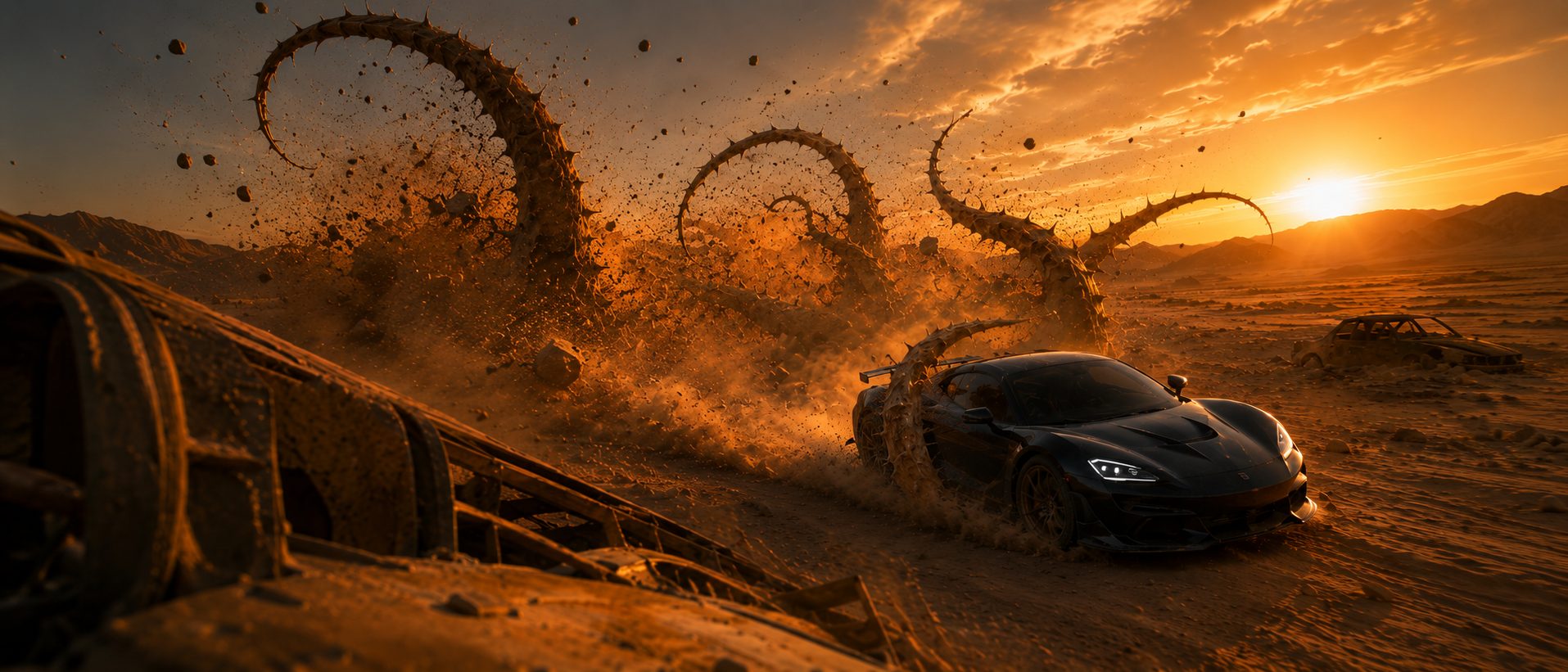
There is no camera on this shoot. No desert permit, no closed highway, no precision driver waiting for the sun to drop. Every frame of this car presentation film starts life in Houdini, is enhanced with AI and is finished in Nuke. We can’t tell you whose car it is yet, but we can show you how we built the world around it.
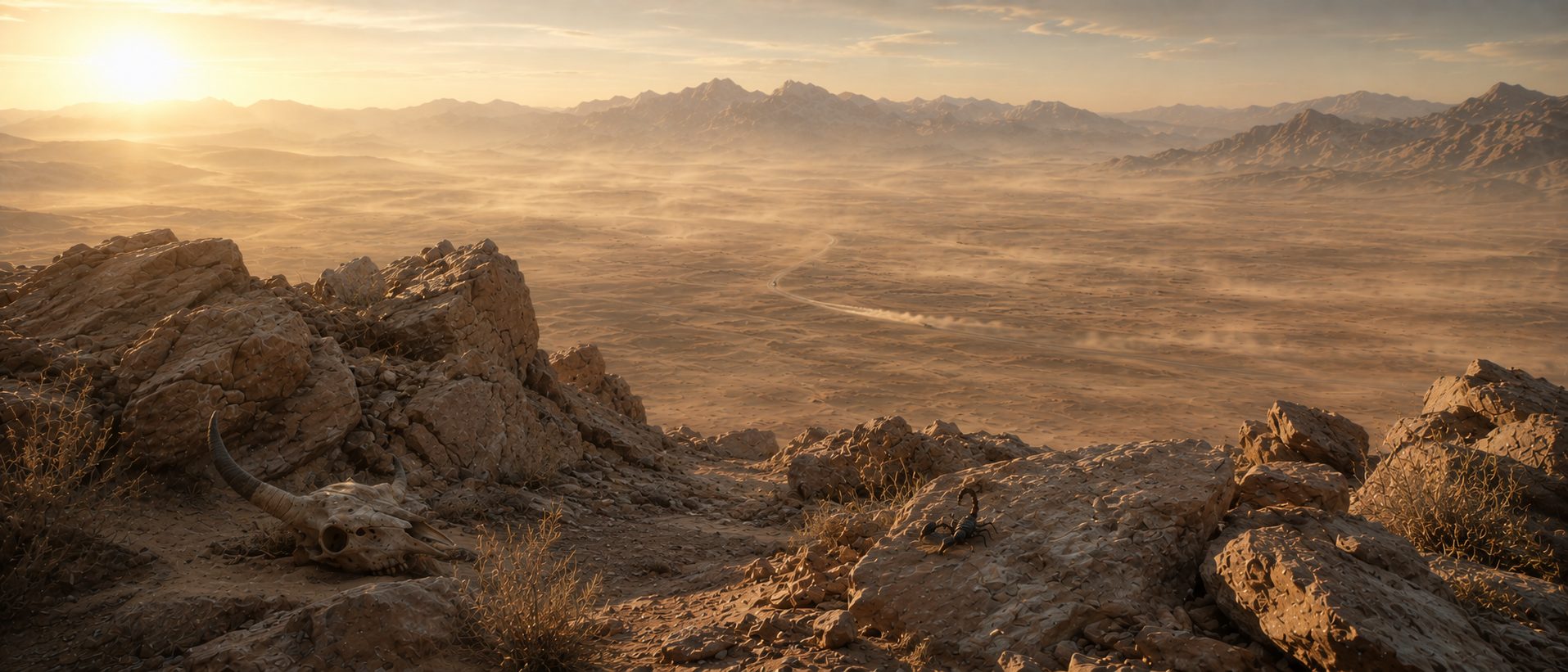
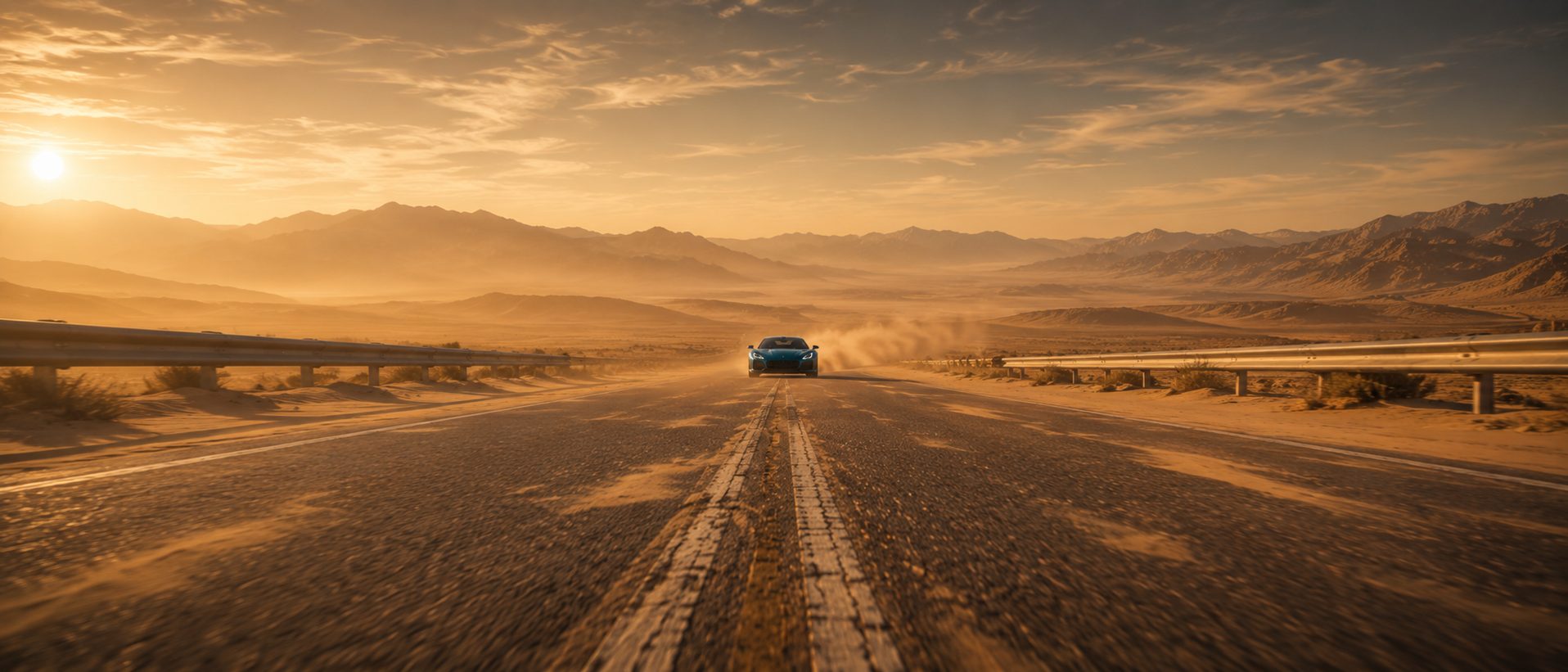
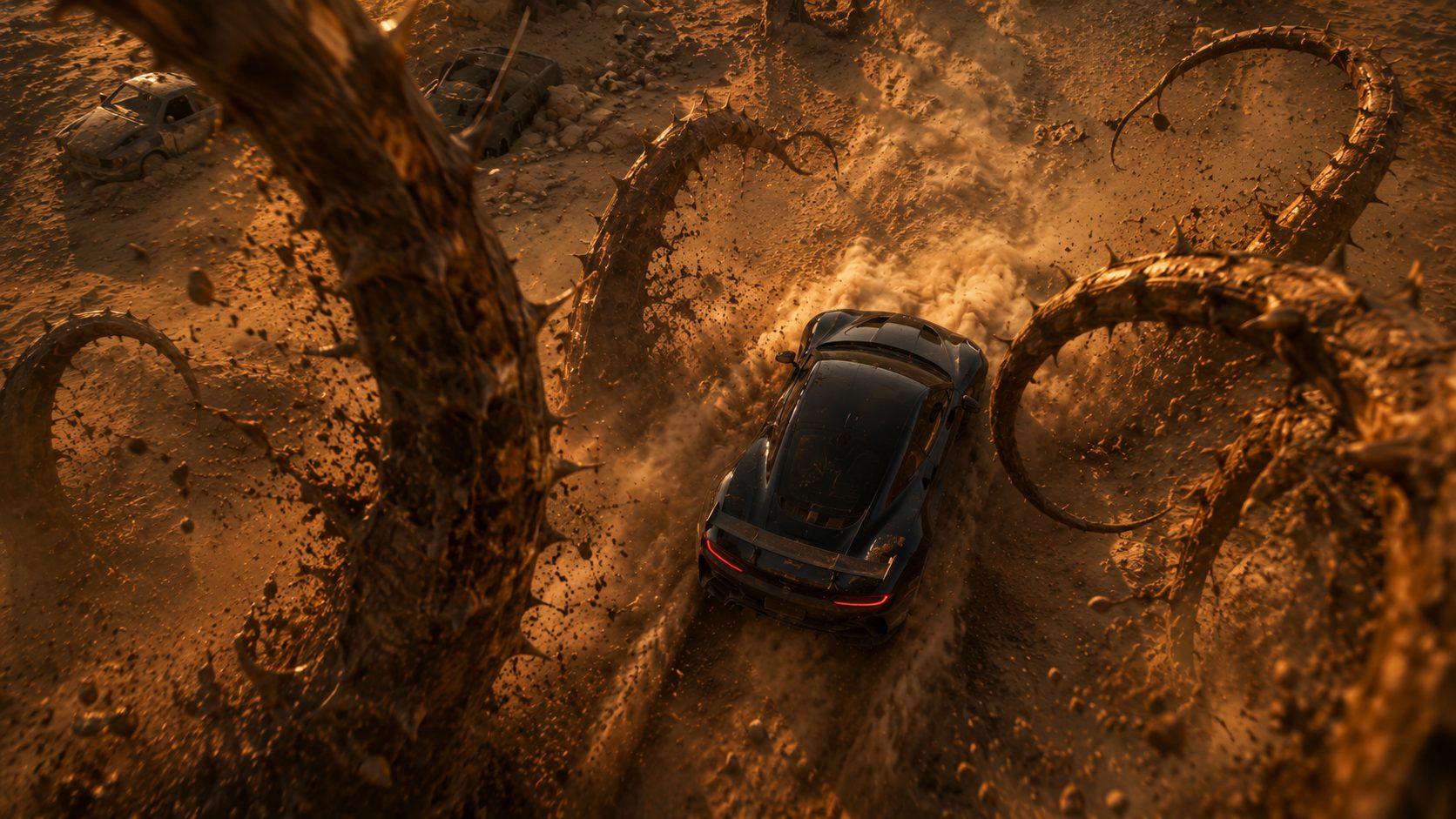
The brief was simple and difficult at the same time: a hypercar crosses an endless desert at golden hour, and the desert fights back. Giant thorned tendrils burst from the sand, wrecks of older cars lie half-buried along the route, and the car outruns all of it. The film had to feel like a live-action shoot, show the car with absolute precision, and stay completely confidential until launch day.
01A car film without a camera
The project follows the playblast-first method we developed on DEFENCE. Every shot is blocked in Houdini, with camera, lens, car path and speed, and playblasted for approval before anything expensive happens. Only approved motion goes on to simulation, rendering and AI enhancement. The car moves exactly as the client signed off, every time.
- 01Houdini
Layout & blocking
Camera, lens, car path and speed for every shot.
- 02Review
Playblast approval
Motion signed off before any simulation starts.
- 03Houdini
Simulation
Sand, dust, debris and the growing thorns.
- 04Solaris · Karma
Rendering
The car and the FX, rendered as separate clean passes.
- 05AI · local
Enhancement
Texture, atmosphere and fine detail on the environment.
- 06Nuke
Comp & finish
Integration, grade, screens and lens character.
02Five problems, five solutions
The car is not ours to reinterpret
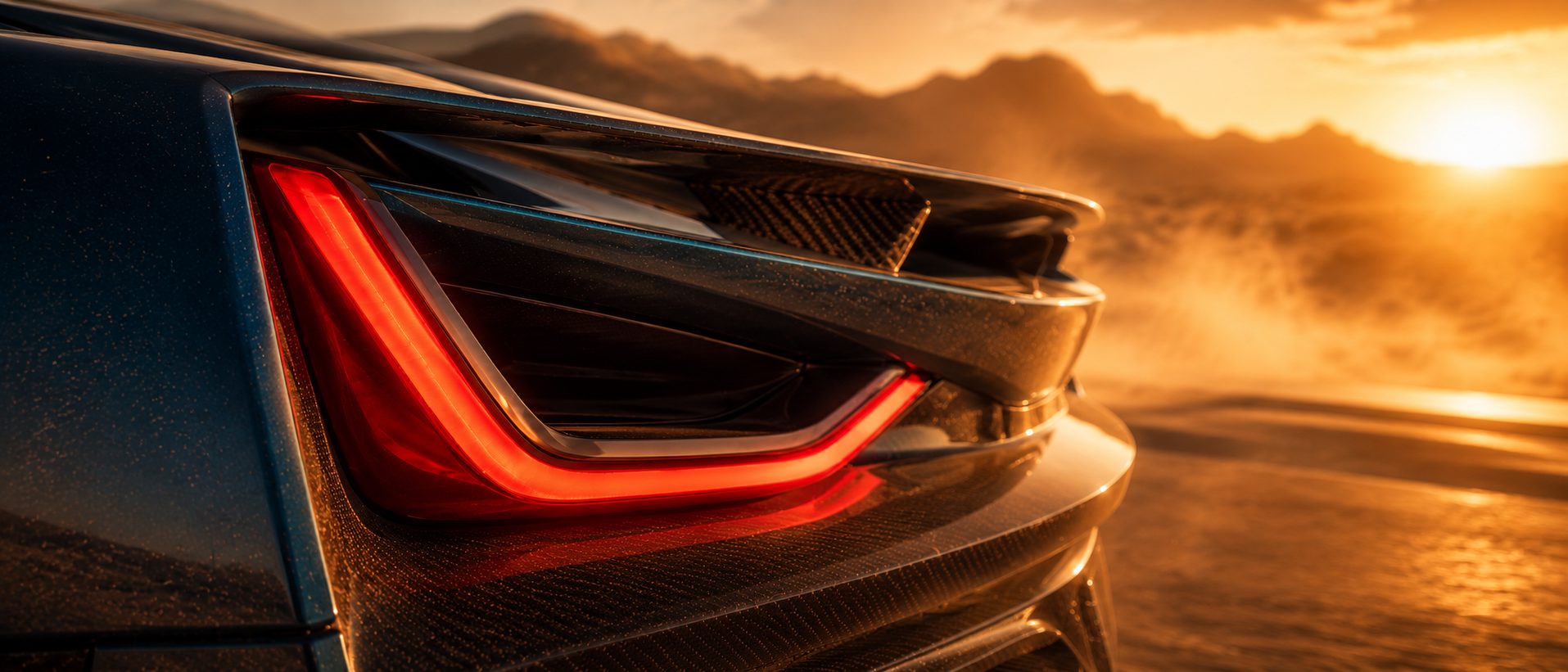
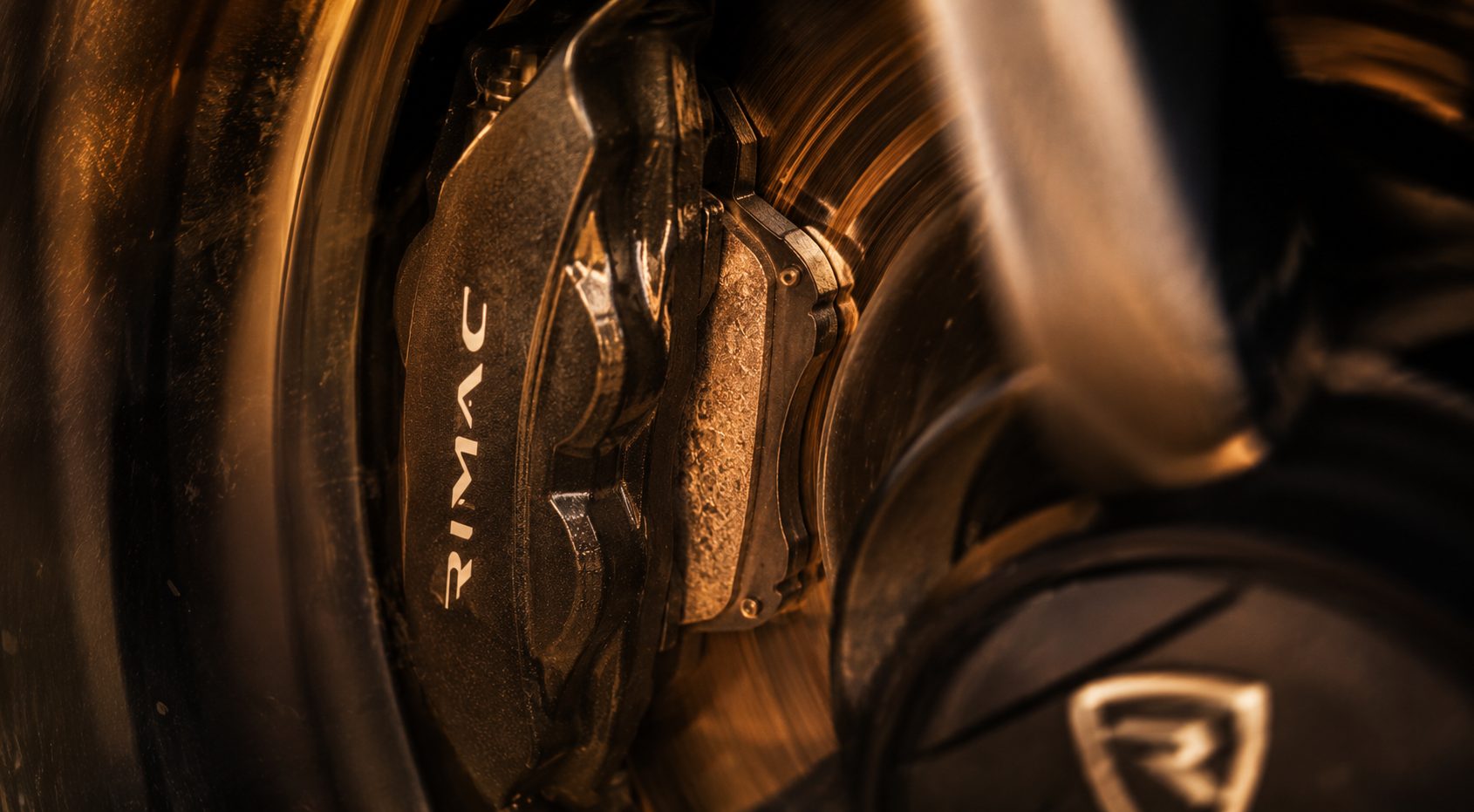
A presentation film sells one exact product. Every panel gap, light signature and wheel spoke has to match the real car. AI image models are good at making things beautiful, and just as good at quietly redesigning them.
The car was never handed to AI. It was rendered from the client’s model in Karma as clean passes and protected with holdout mattes through the whole chain. AI worked only on the world around it: sand texture, sky, haze and wrecks. In Nuke, the untouched car passes always sit on top. The close-ups are where you can check it.
Sand at 300 km/h
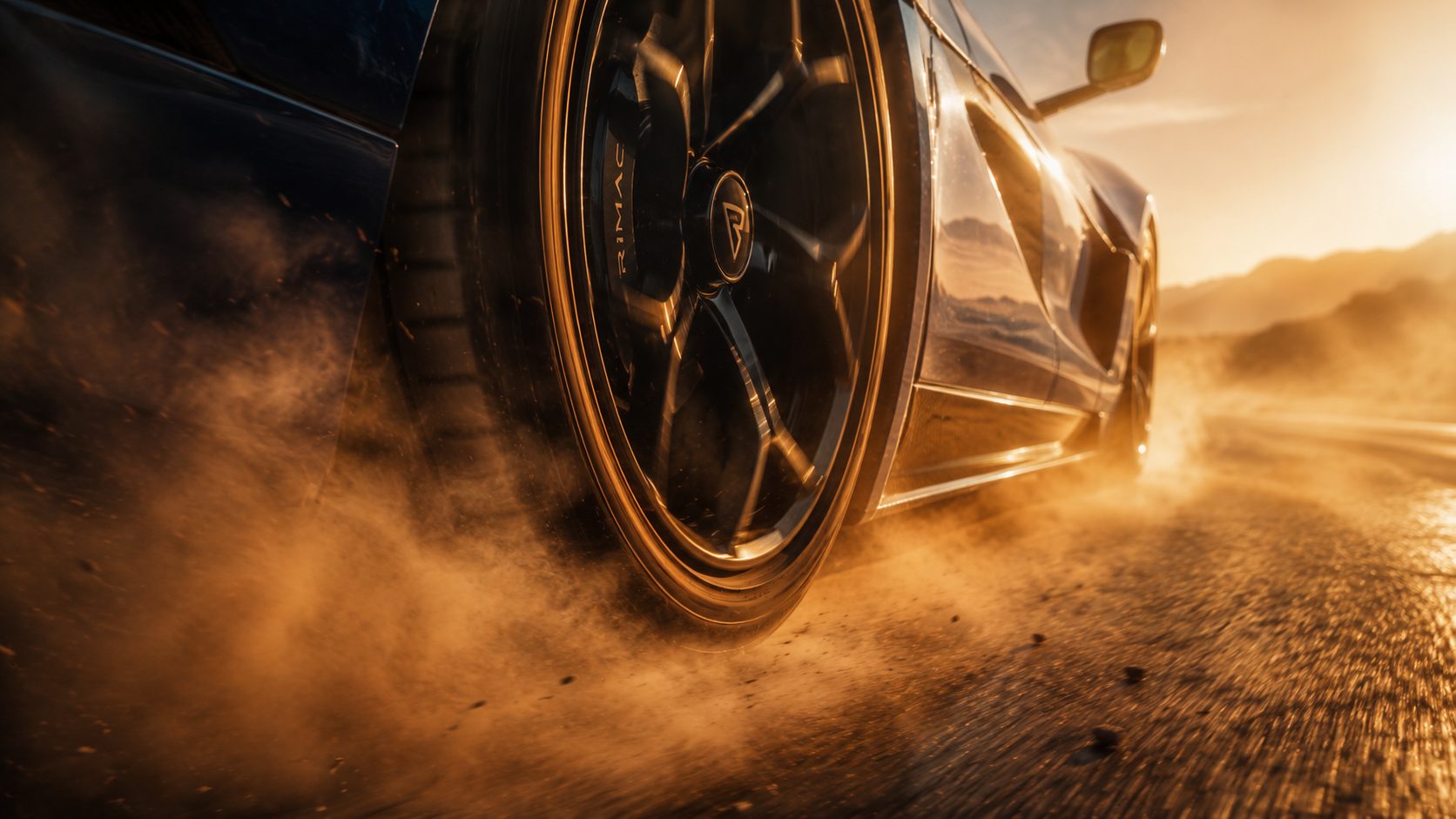
Dust is what sells speed, and dust is where CG usually gives itself away. Too little and the car floats, too much and you lose it. Sand also has to read at the right scale: a wheel-height spray looks nothing like a dune-sized plume.
Every shot has a layered Houdini simulation: grains thrown by the tyres, a volume for the dust cloud and a wind field for drifting sand. The simulation sets how the dust moves. AI adds the fine, photographic texture that would take days to render at full resolution. To stop that texture flickering from frame to frame, the simulation’s own passes guide the AI, and Nuke smooths what is left.
A desert that wakes up
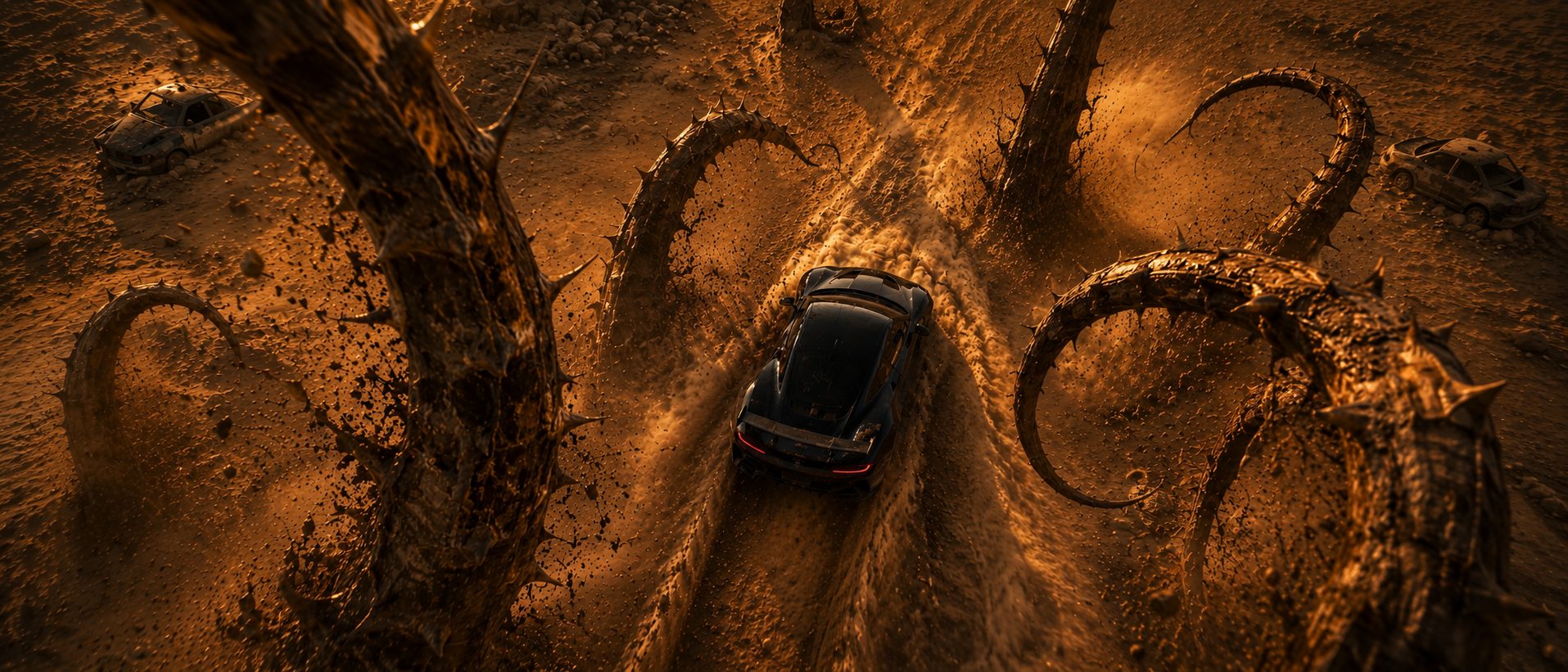
The creative heart of the film is the moment the desert attacks: giant thorned tendrils bursting from the sand. The client loved the idea, and worried about it. A luxury brand cannot look like a horror film.
The tendrils are procedural growth systems in Houdini, art-directed curve by curve in the blocking stage, so we could tune exactly how close they come and how fast they rise. Each eruption is a sand-and-debris simulation driven by the growth. Then came the grade: the client asked for “dangerous, but golden”, so every tendril catches the same warm sunset light as the car. The result is drama, not fear.
Inside the cockpit
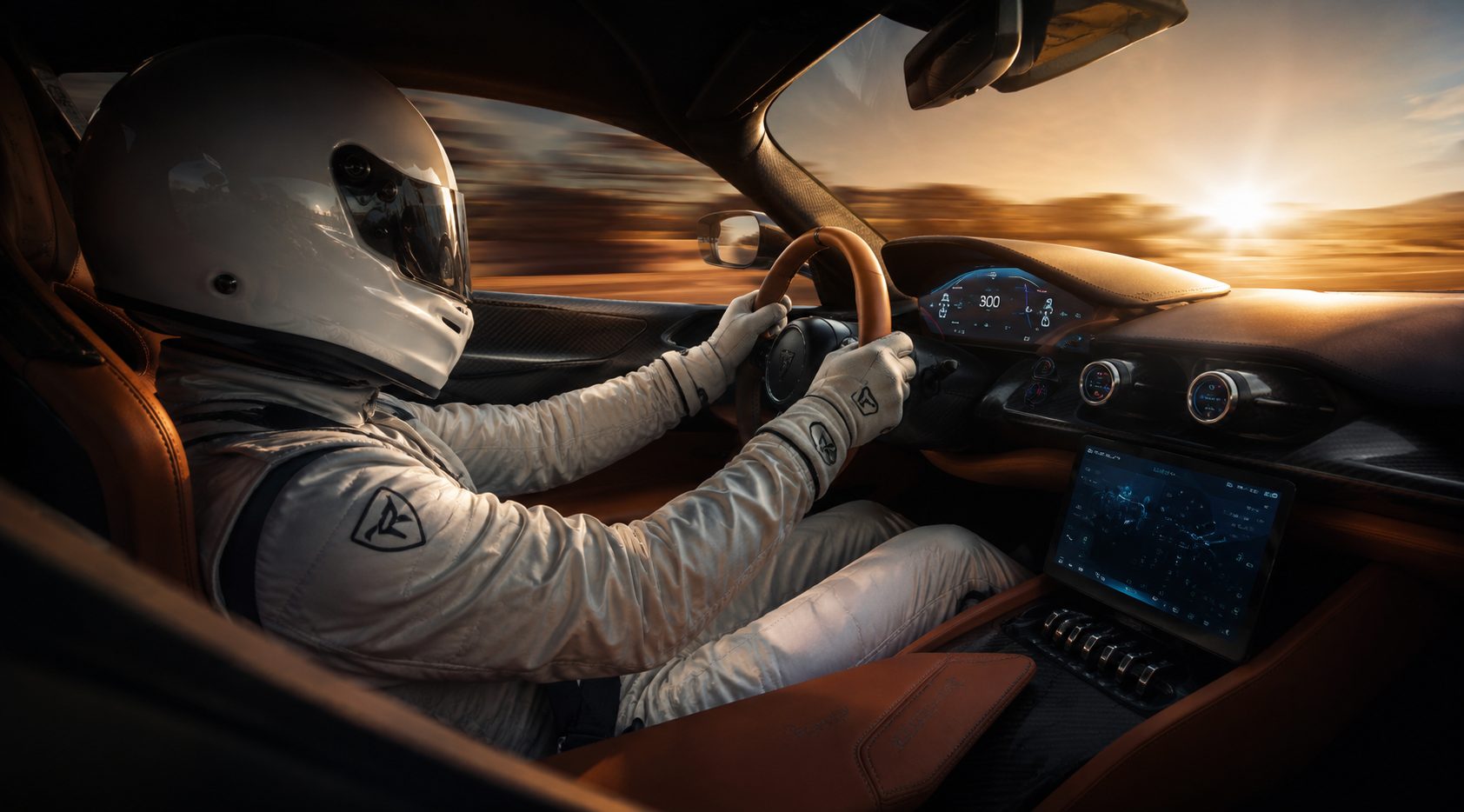
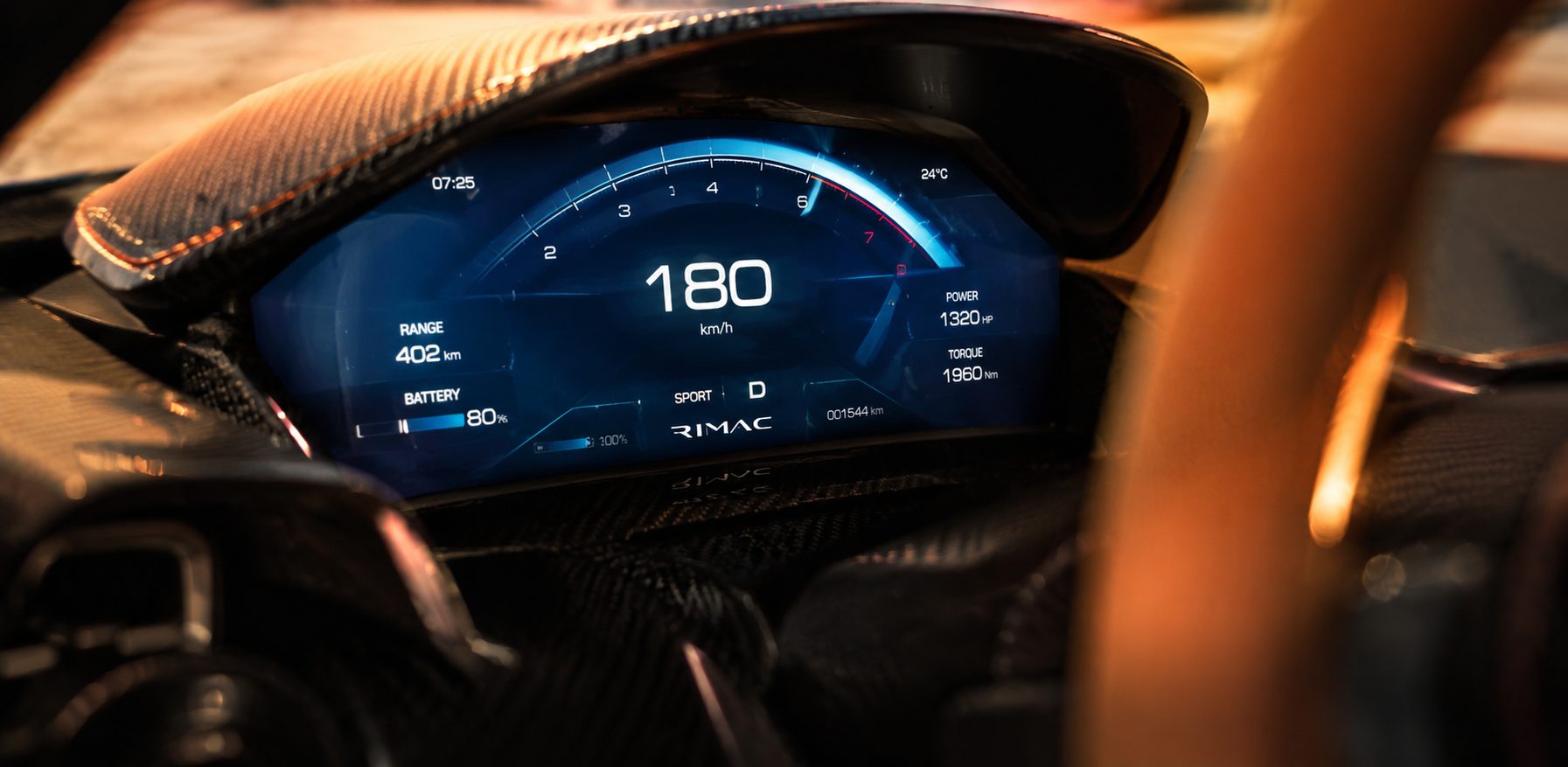
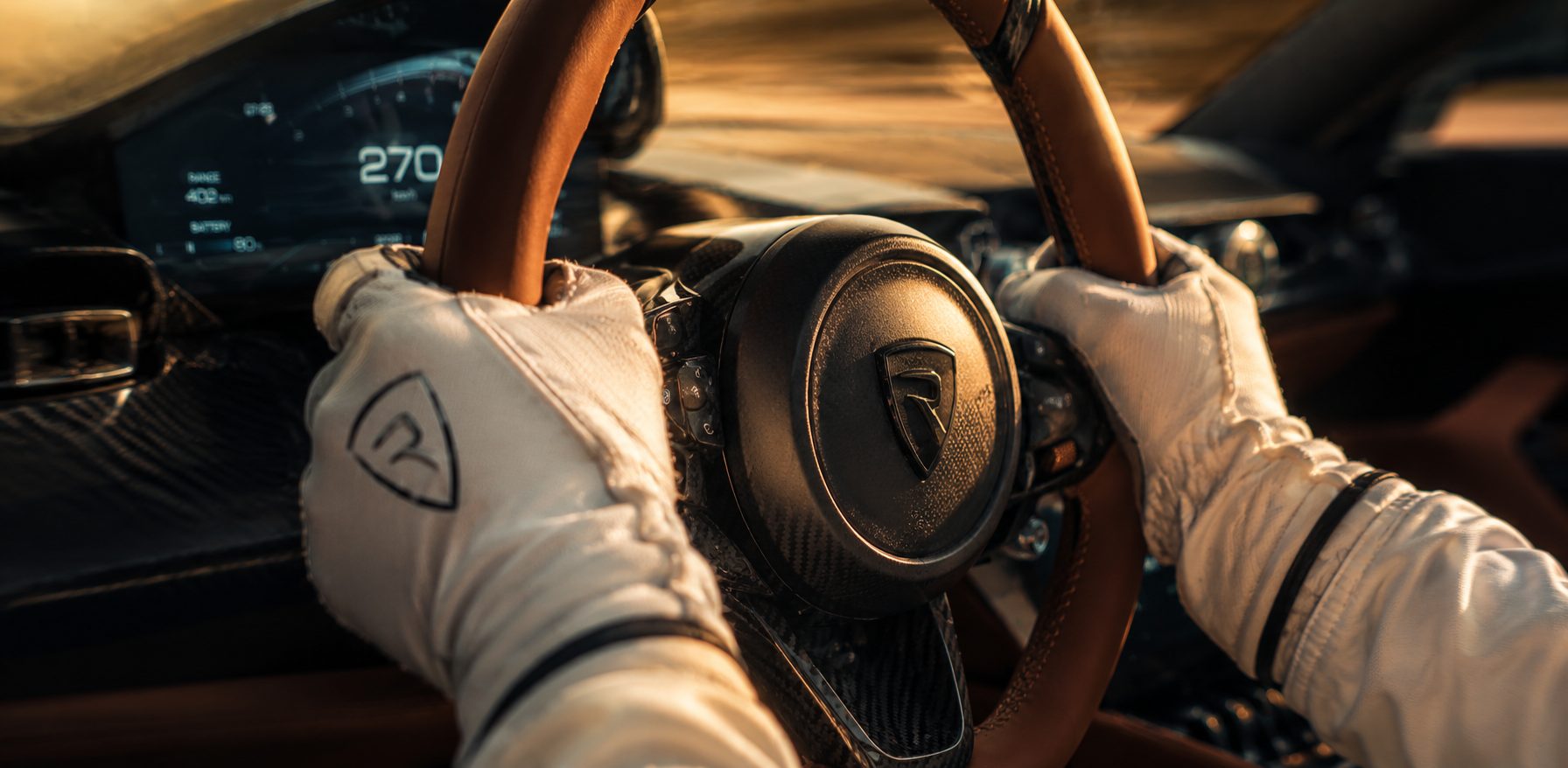
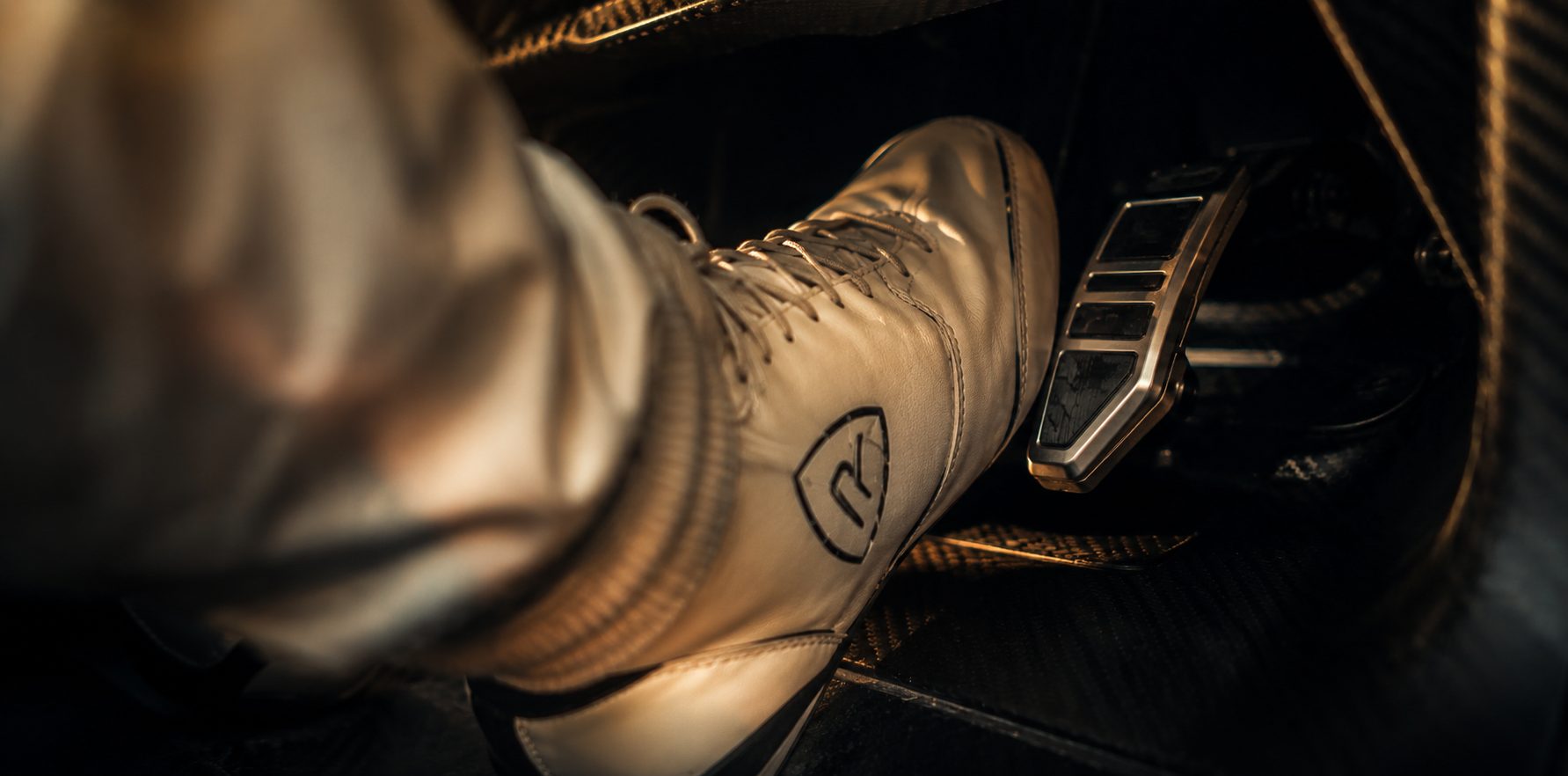
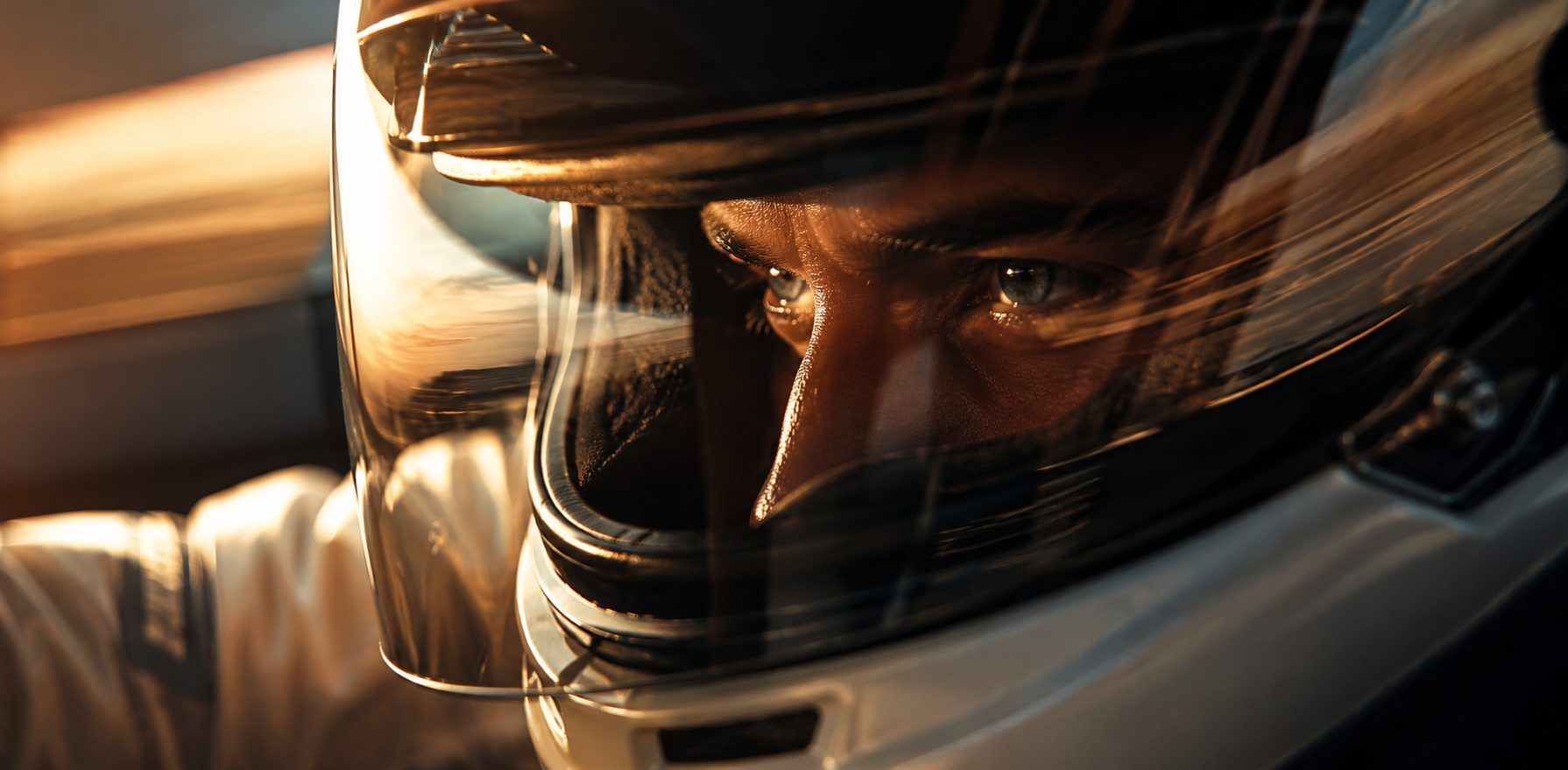
Interior shots get the closest look of all. The instrument display has to show real content in the brand’s own interface style, and the driver has to feel present without a real person or a real car.
The displays are motion graphics built in Nuke in the client’s interface style and tracked into the rendered dashboard, so every number is controlled and consistent from shot to shot. The visor reflections, the dust on the gloves and the light raking across the cockpit all come from the same master light rig as the exterior shots, so cutting between inside and outside feels like one continuous drive.
A client nobody can know about
The car has not been revealed. Leaks cost launches, and many AI tools work by uploading images to someone else’s servers. That alone ruled out half the usual toolbox.
Our AI enhancement runs locally, on our own GPU workstations, through our own ComfyUI workflows. Client files never leave the building. Renders, simulations and AI passes all stay on internal storage, shared only with the people on the project. The only frames that leave the studio are the ones the client approves, like the ones on this page.
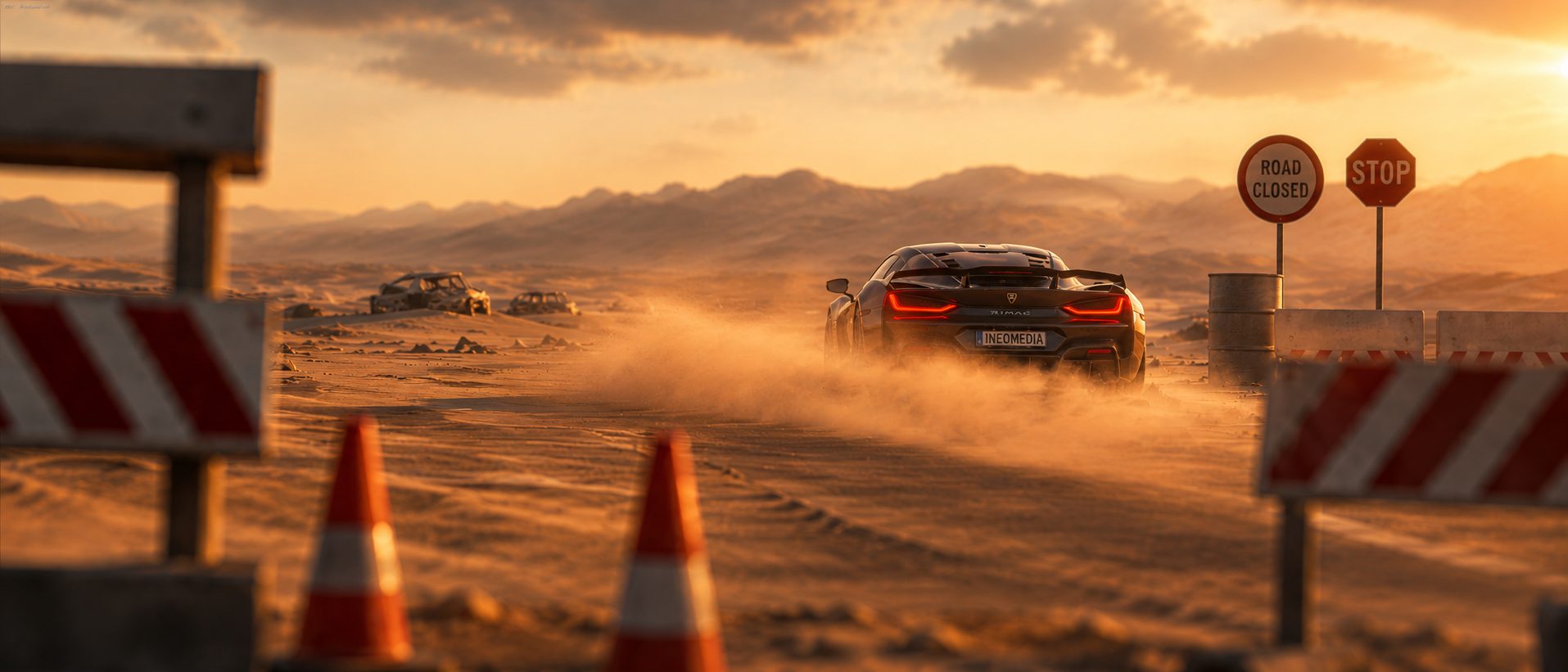
We can simulate a sandstorm and generate a sunset, but the car always comes first. Our job is to build a world big enough to deserve it.
IneoMedia postproduction team
03One sun, every shot
Golden hour lasts minutes in real life, and we needed it for the whole film. Every shot is lit by one shared sun: the same direction, colour and haze. After AI enhancement, everything is graded back to the same reference in Nuke. Wherever a shot sits in the edit, the light tells the same story, from the first wide establishing frame to the last close-up of the dust.
04What comes next
The film is still in production, and the full piece will premiere with the car itself. Until then, these frames show what has become our standard: full simulation where physics matters, AI where it makes the image richer, and Nuke to bring every layer under one hand. On the most important element, the product, nothing is left to chance.
Launching a product that deserves a film?
Talk to IneoMedia. We keep secrets as well as we keep frames.