Two cars, a city, a mountain road, a forest and a studio stage. In Barcelona, IneoMedia joined a high-end Toyota commercial as VFX supervisor on set, then took the same footage through postproduction. Our job on the shoot was simple to describe: make sure that everything we would need later was captured now, while the cars, the light and the crew were still there.
A car commercial looks effortless on screen. Behind it is a camera car with a crane arm, a stage full of flags and lights, a green screen on a public street, and a product that has to look perfect in every frame. Most of what can go wrong in post is decided on set. That is why the people who will finish the film should be standing next to the camera when it is shot.
01Why VFX belongs on set
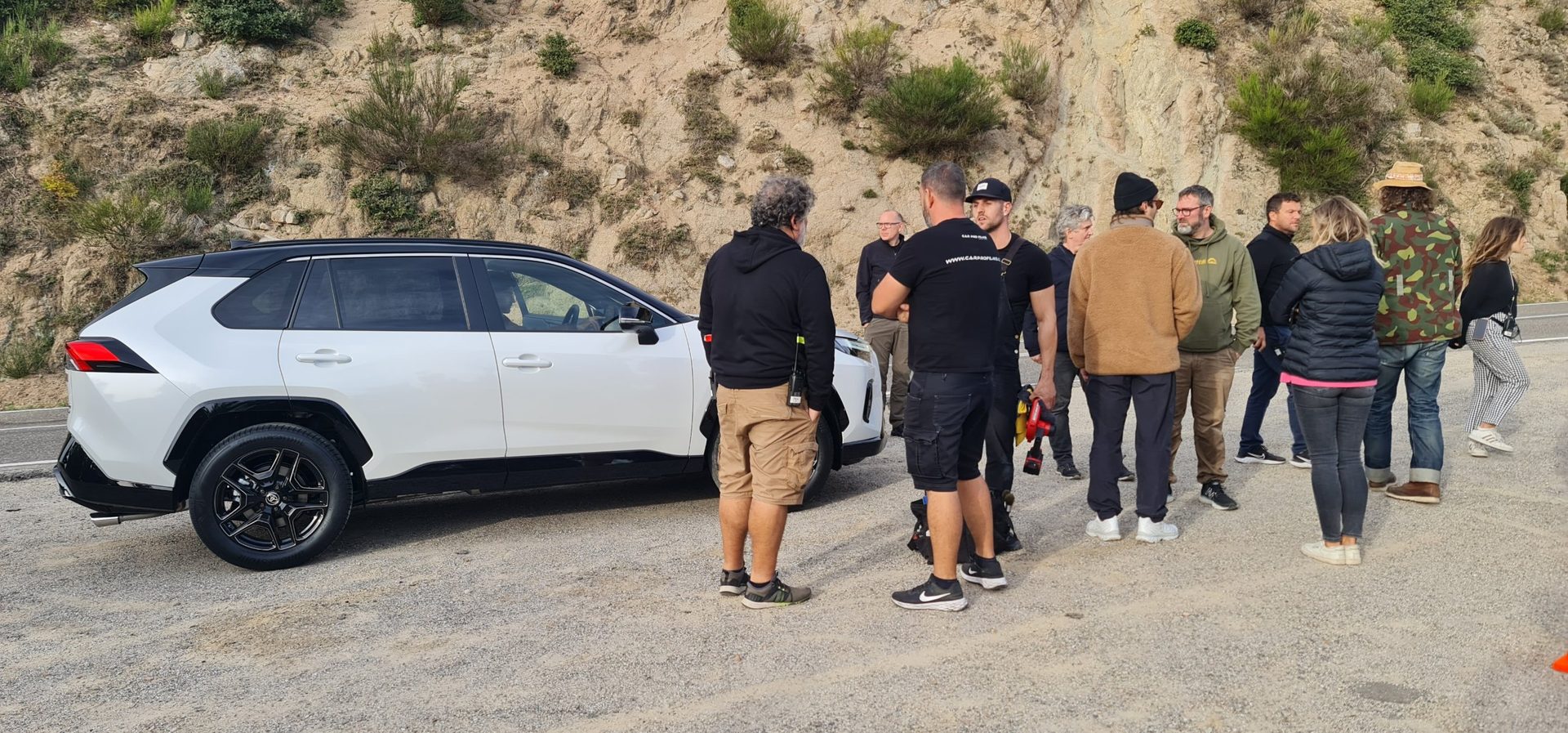
Every hour on a car shoot is expensive: closed roads, a precision driver, a camera car crew, permits. Fixing a problem in post costs time too, and sometimes it cannot be fixed at all. A missing clean plate, an unrecorded lens or a reflection nobody noticed can turn a simple shot into days of paint work. Our supervisor on set works with the director and the DP to catch these before the camera rolls, and to collect the reference that postproduction depends on.
- 01Prep
Shot breakdown
Every VFX shot flagged before the first shooting day.
- 02On set
VFX supervision
Plates, rigs and reflections checked take by take.
- 03Reference
Data capture
HDRI, grey and chrome balls, charts, lens and speed notes.
- 04DIT
Ingest & conform
8K R3D in, proxies out, every take named and logged.
- 05Nuke · Houdini
Clean-up & CG
Rig removal, reflections, particles and plate extensions.
- 06Delivery
Grade & versions
Final grade, formats and market versions.
02Seven problems, seven solutions
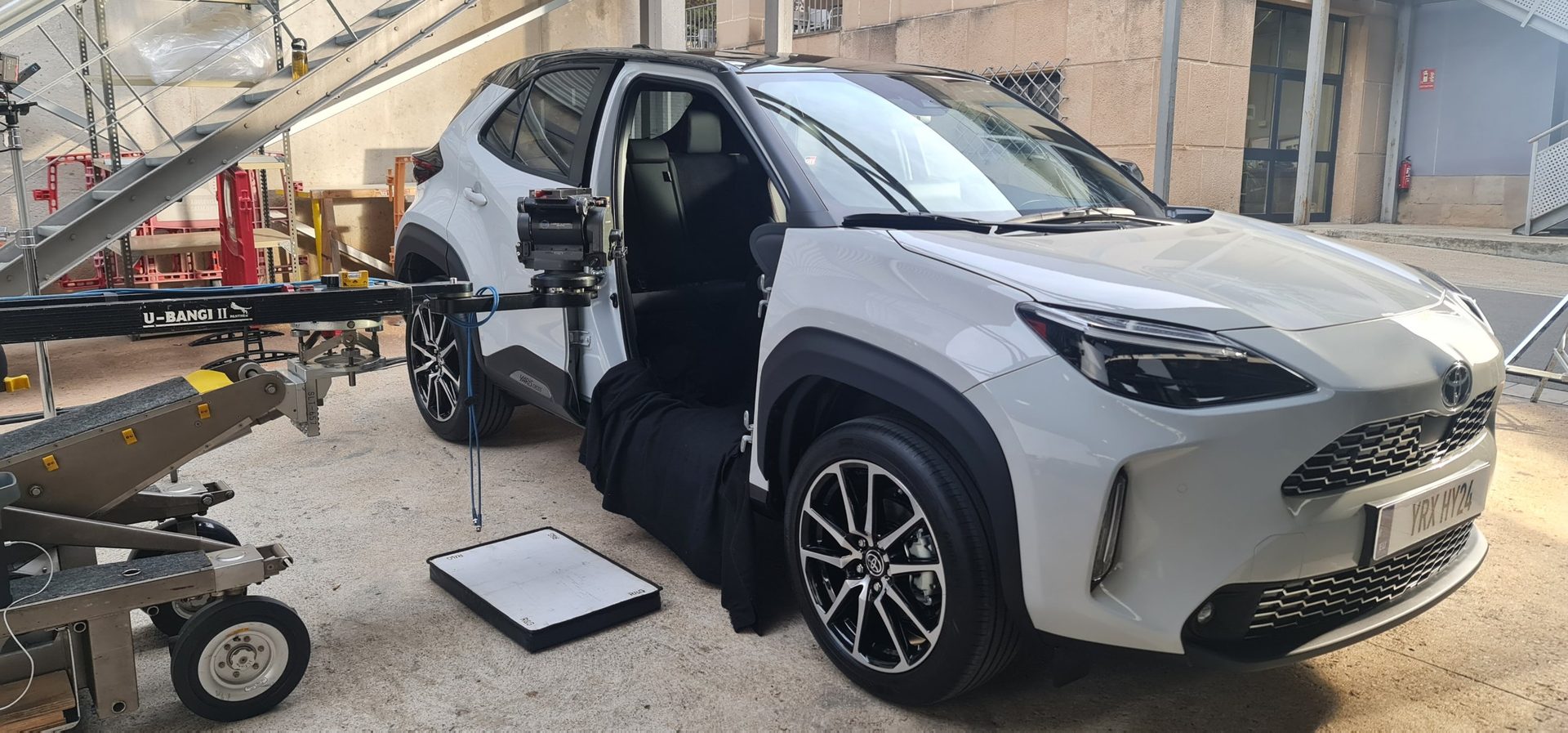
A car is a mirror
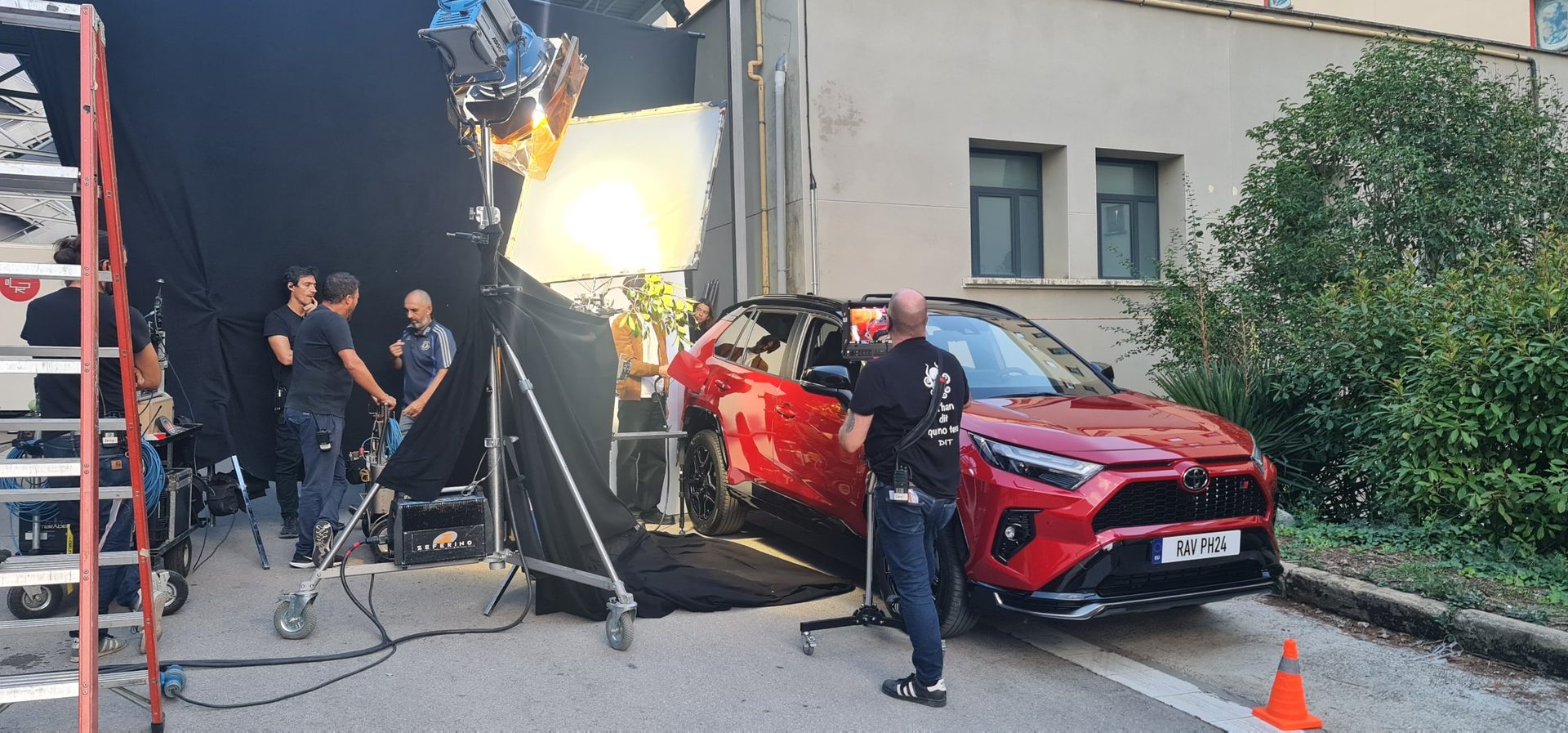
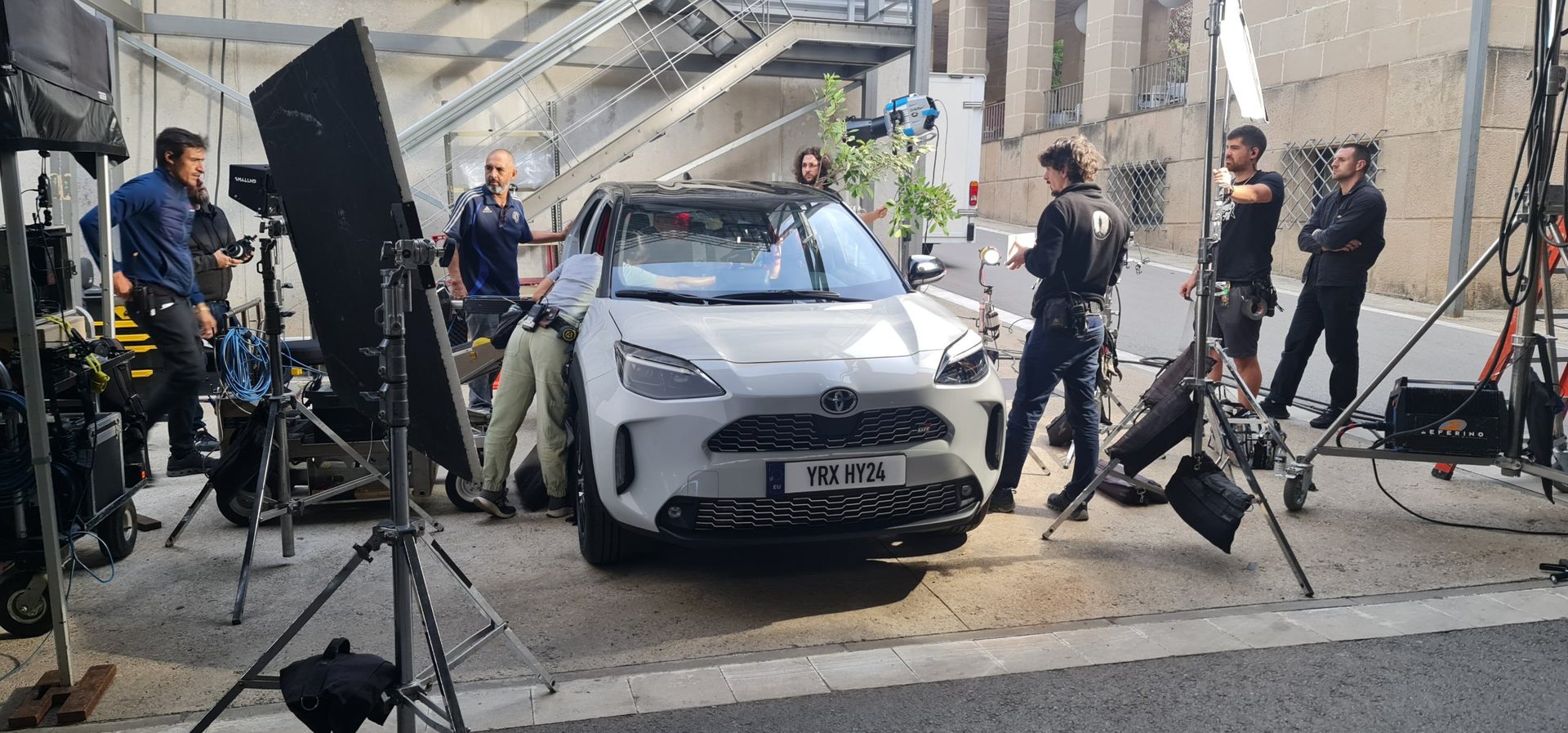
Paint, glass and chrome reflect everything around them: lights, stands, crew, the camera and the street itself. On a red or white car with a high-gloss finish, one bright T-shirt in the wrong place shows up across a whole door panel.
We walked each setup with the DP before lighting was locked and marked what had to be flagged on set and what we could clean in post. Black drapes and large negative fill shaped the reflections into clean lines along the body. After the hero take, we shot a reflection pass with the crew out of the frame, so every remaining reflection could be replaced instead of painted.
The camera car is in every shot
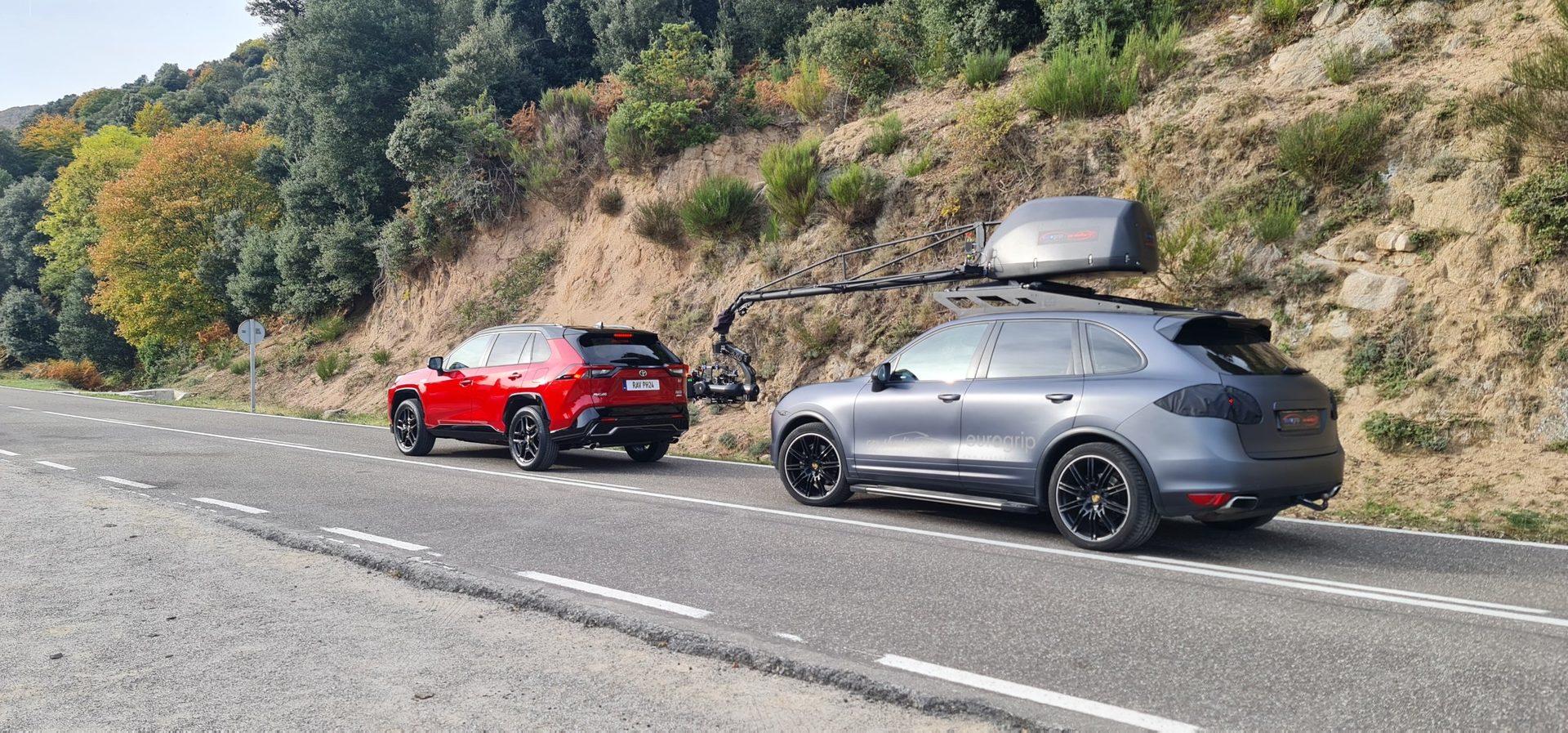
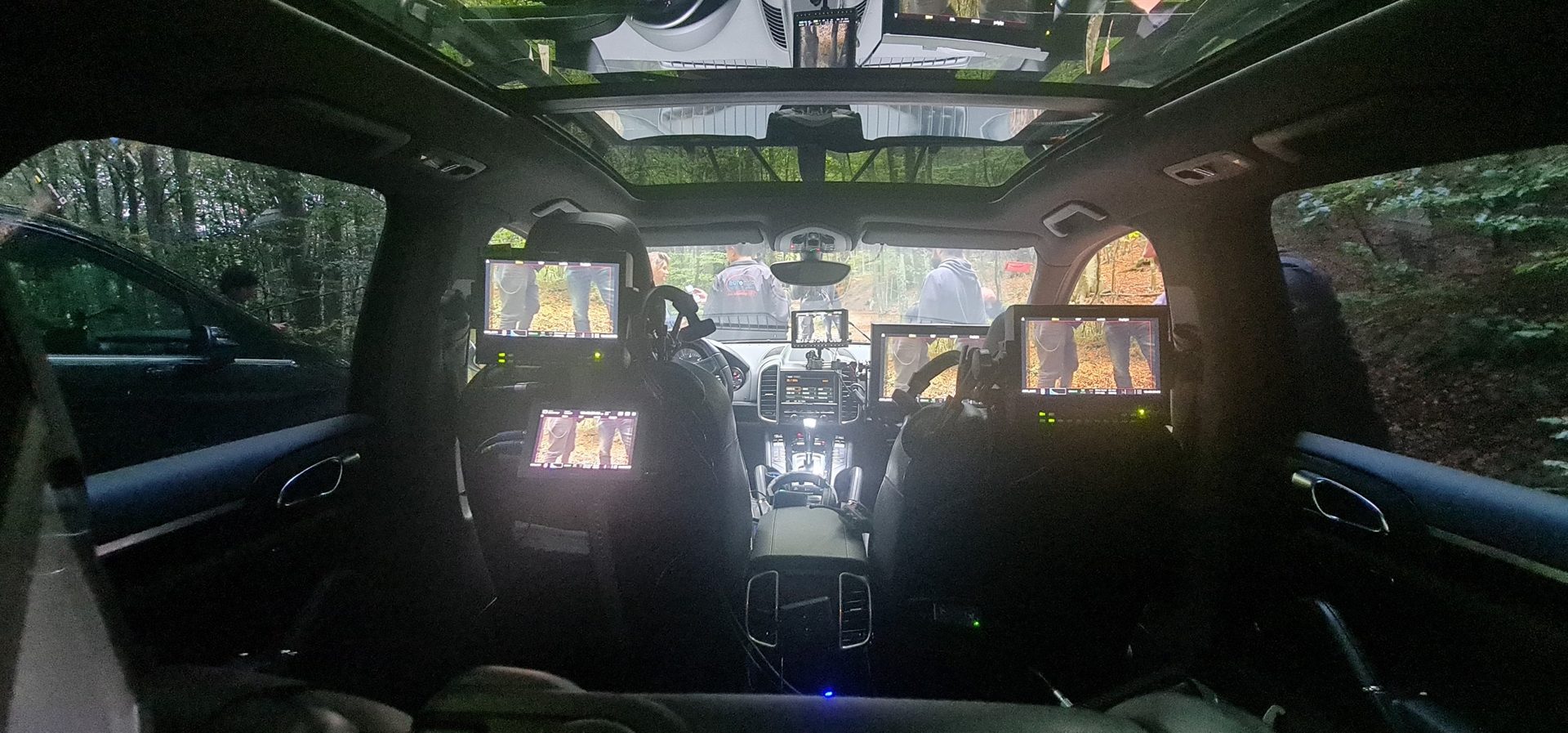
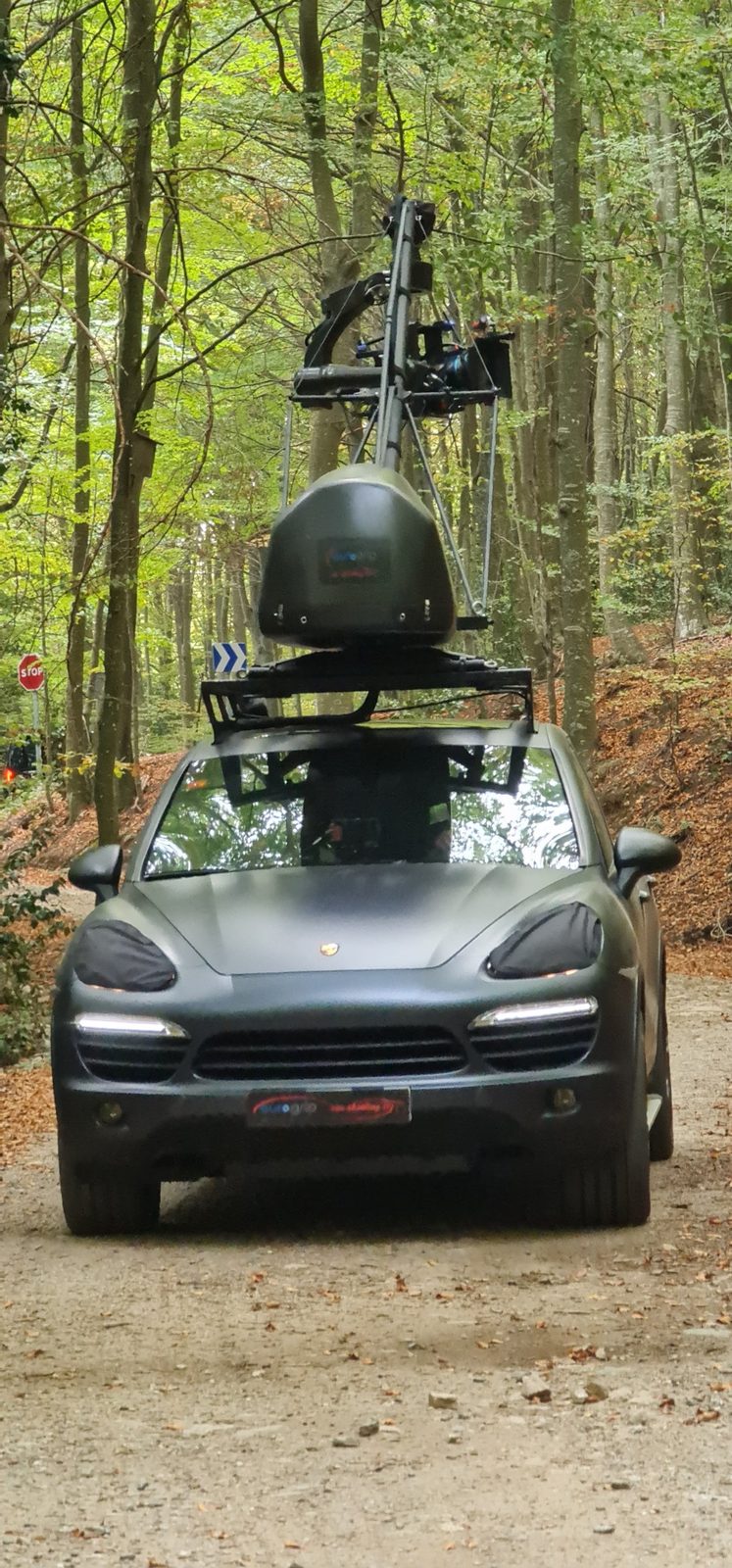
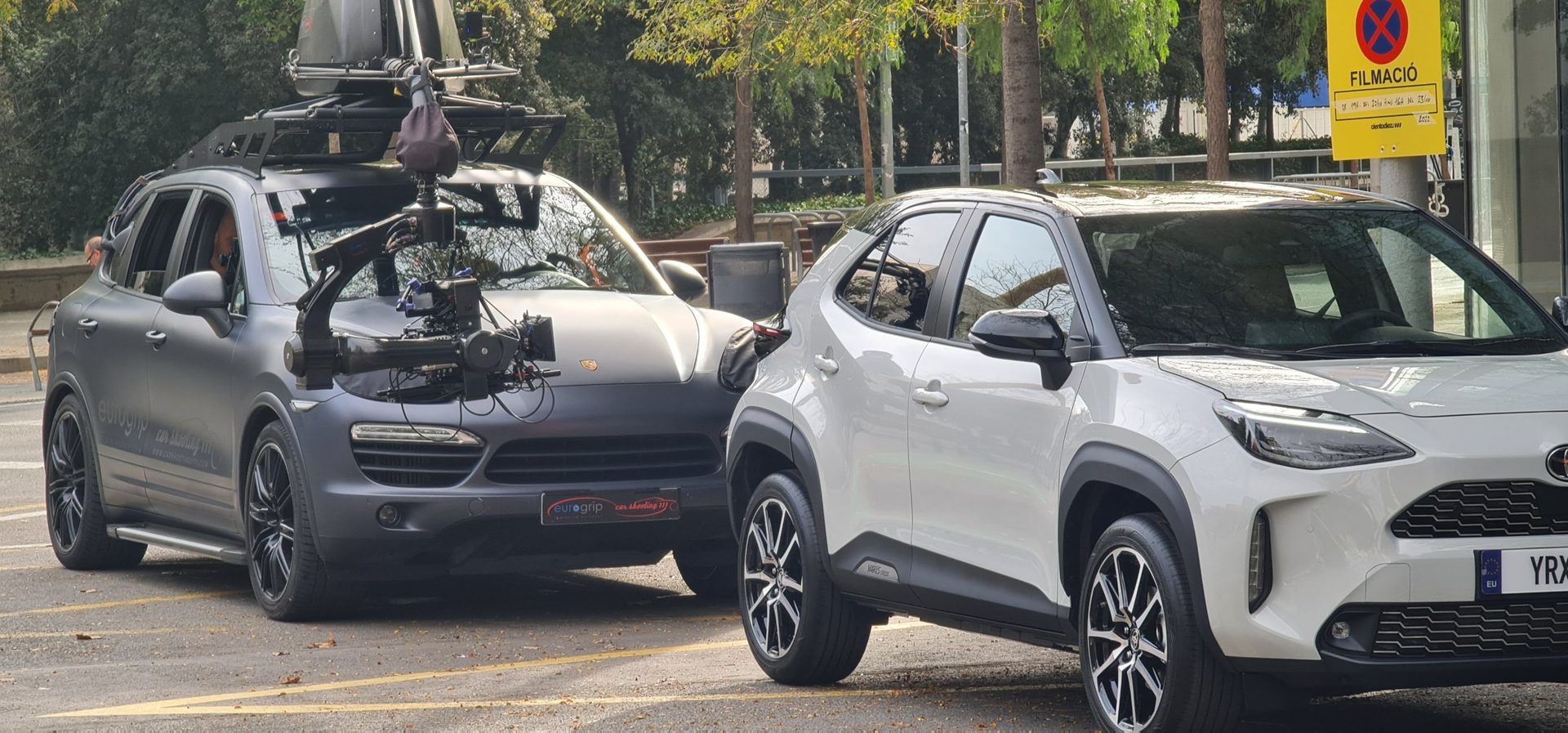
Tracking shots are filmed from a camera car with a remote crane arm. The arm, its shadow and the camera car itself can appear in the paint, the windows and the wheels of the hero car. At speed, the road adds vibration that the arm cannot always absorb.
For every tracking setup we logged speed, lens, focal length, arm height and distance. After a good take, the camera car repeated the run without the hero car, giving us a clean plate of the road for rig and reflection removal. Shooting 8K gave us room to stabilise and reframe in post without losing the resolution the delivery needed.
A green screen next to white paint
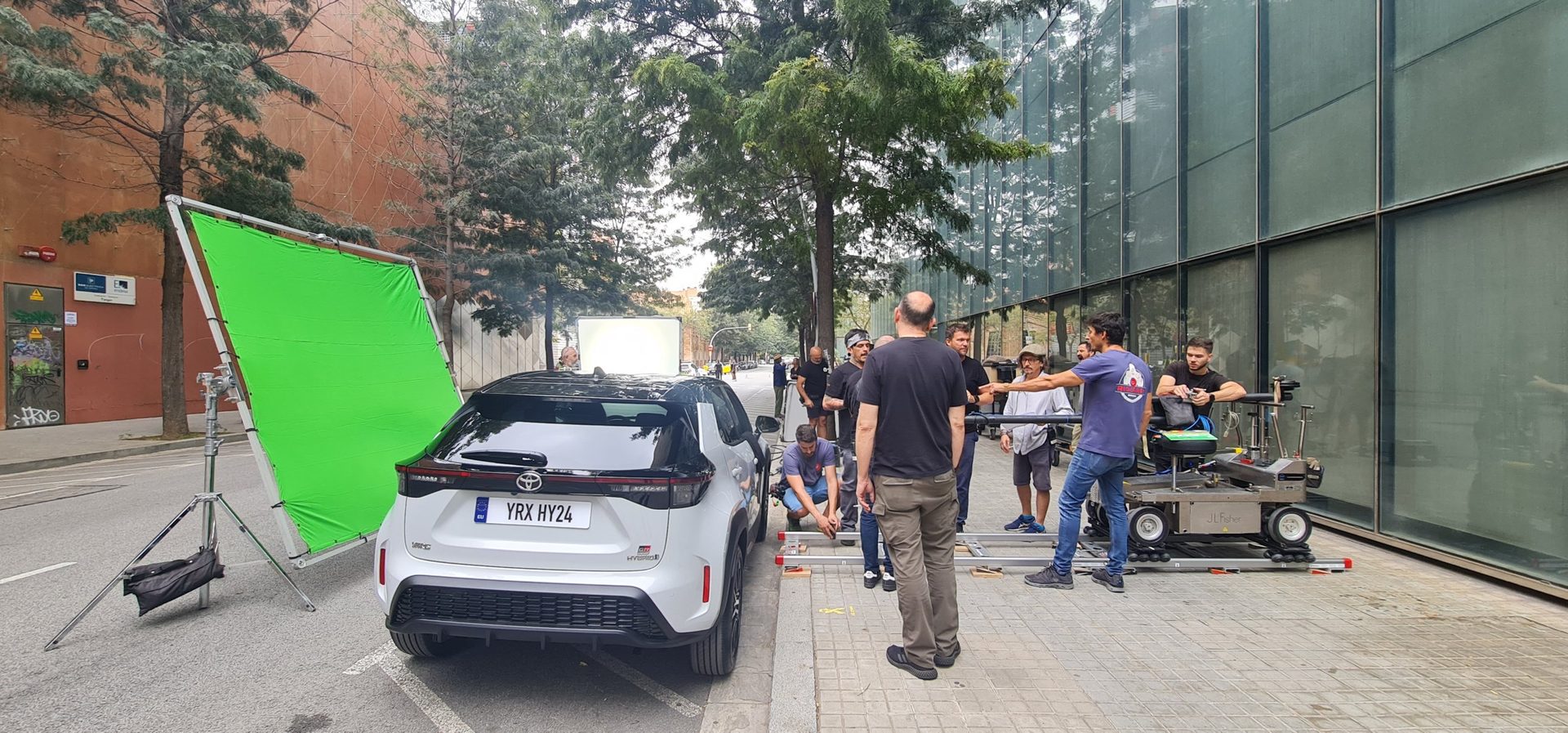
Some shots needed background replacement on a public street. A green screen next to a white car is risky: green light spills onto the paint and shows in the glass, and fixing a tinted body panel is much harder than fixing a background.
The screen was angled away from the car and placed only as large and as close as the shot needed. We shot each setup with and without it, so the colour of the paint always had an untouched reference. Any remaining spill was removed in Nuke against that clean reference, not by eye.
Light that will not wait
One day could move from city streets to a mountain road to a forest. The sun moves, clouds come and go, and anything added in post has to sit in exactly the light that was on set at that moment.
Every setup with VFX work got its own reference: an HDRI of the location, grey and chrome balls, a colour chart and a grey card for exposure. Those references are what let CG particles, replaced backgrounds and clean-up patches match the plate in post, shot by shot.
Macro worlds
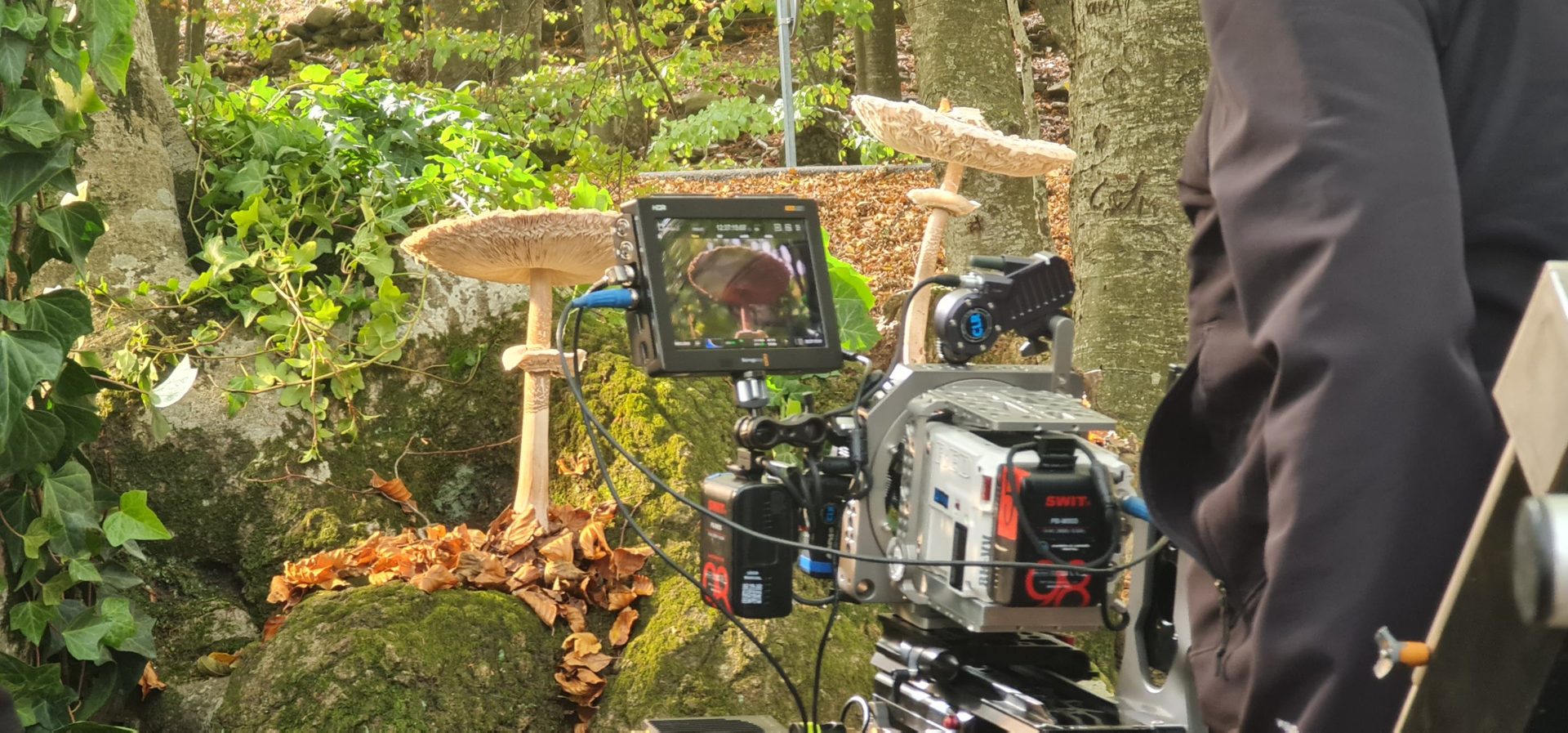
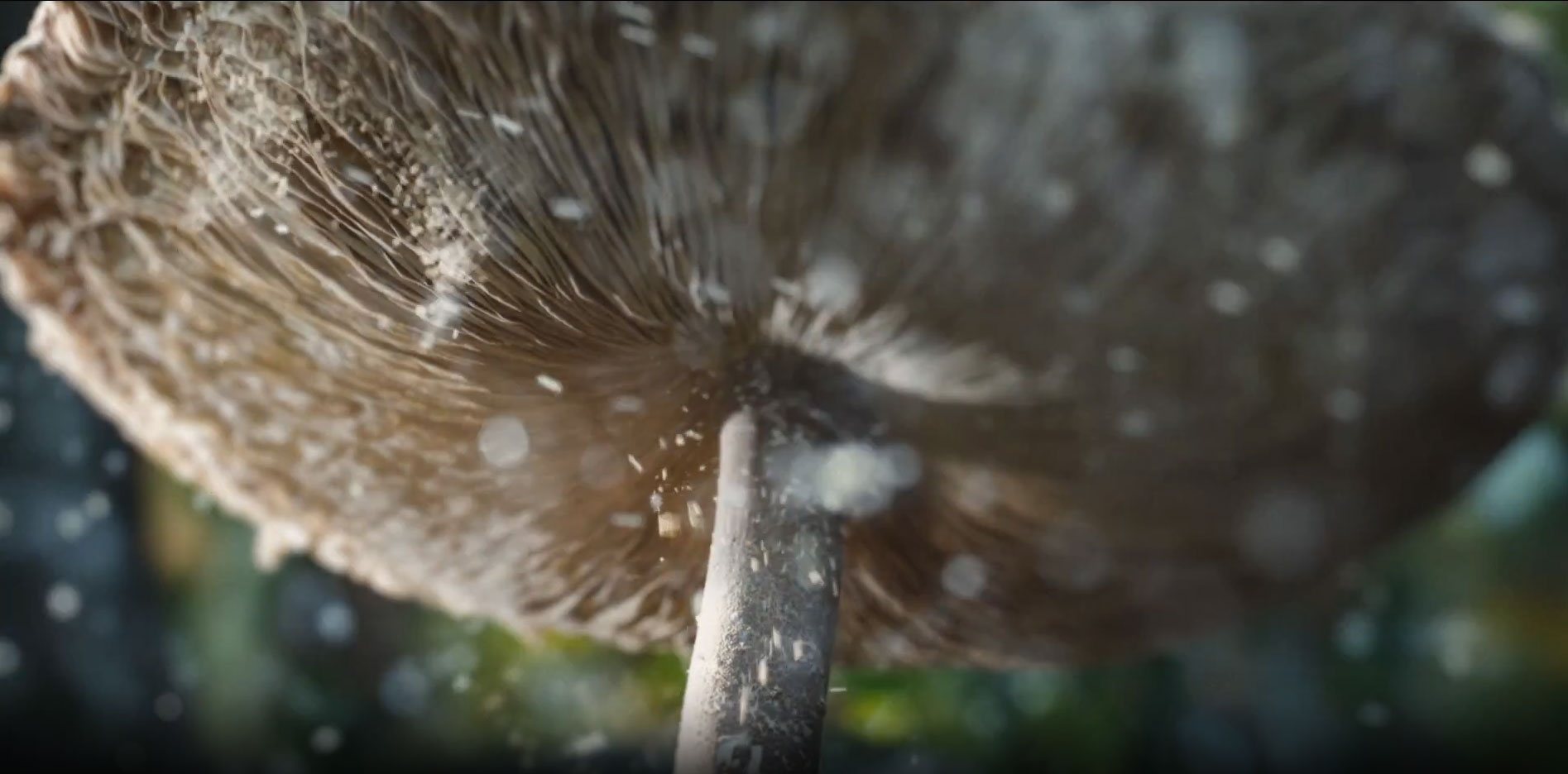
The film includes macro moments: a mushroom releasing spores, gravel lifting off the road, water on the paint. At that scale, nature does not perform on cue. Real spores drift wherever they like, and a lens this close has almost no depth of field.
We shot the hero mushrooms as practical props on set, so the light, the moss and the lens behaviour are all real. The spores and fine particles were added in Houdini, simulated at the right scale and rendered to match the lens’s focus falloff, then composited in Nuke. The camera saw the world, and we added only what it could not get on cue.
Plates, badges and markets
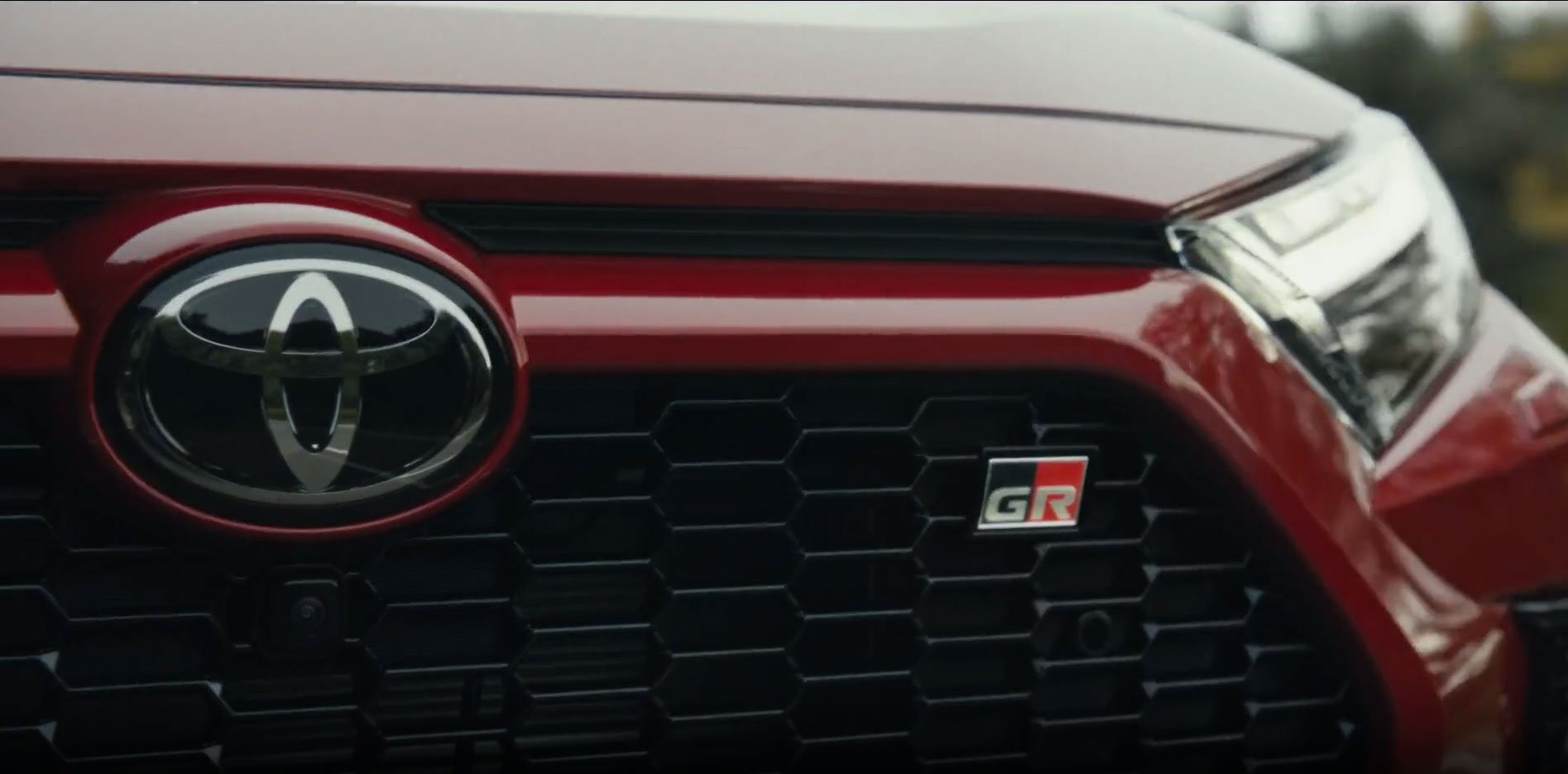
A commercial like this runs in many countries. Licence plates change from market to market, and the logo and the GR badge must look exactly as they do on the real car. Generative tools are good at making things beautiful, and just as good at quietly redesigning them.
Plates were shot clean and tracked, so each market version can get its own plate in Nuke. The product itself was never handed to generative AI: every badge, light and panel on screen comes from the camera. Where AI helped, it worked on the world around the car, never on the car.
A car nobody may see yet
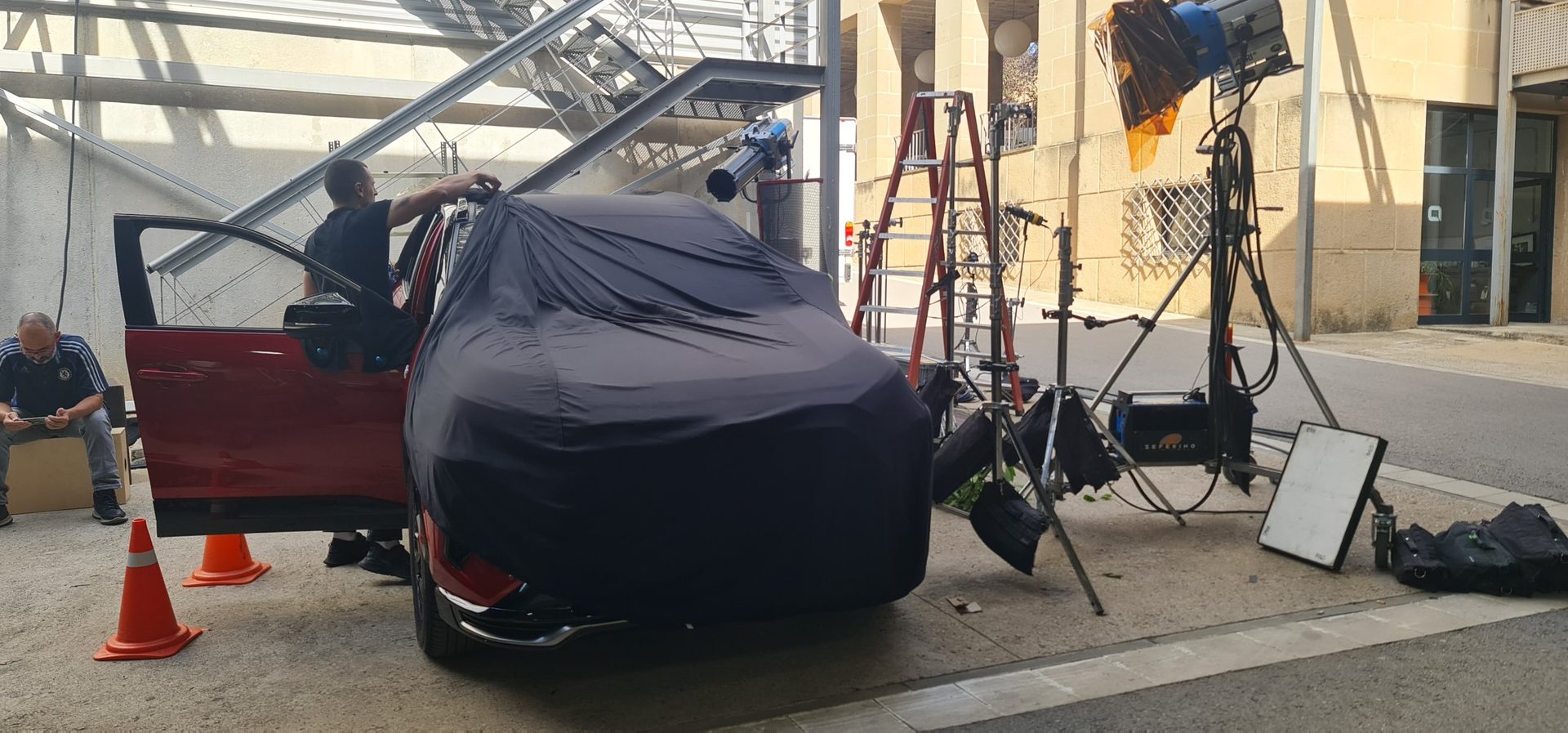
The cars were shot in public places, in a city where every passer-by has a camera. Images from the set must not appear before the campaign does.
Between setups the cars stayed under covers. The city locations ran with filming permits and a controlled area around the set. Footage moved only on the production’s own drives and stayed on internal storage in post, shared only with the people working on it.
The best VFX shot on a car commercial is the one nobody notices. Most of that work happens before the camera rolls.
IneoMedia VFX supervision
03From 8K on set to the edit
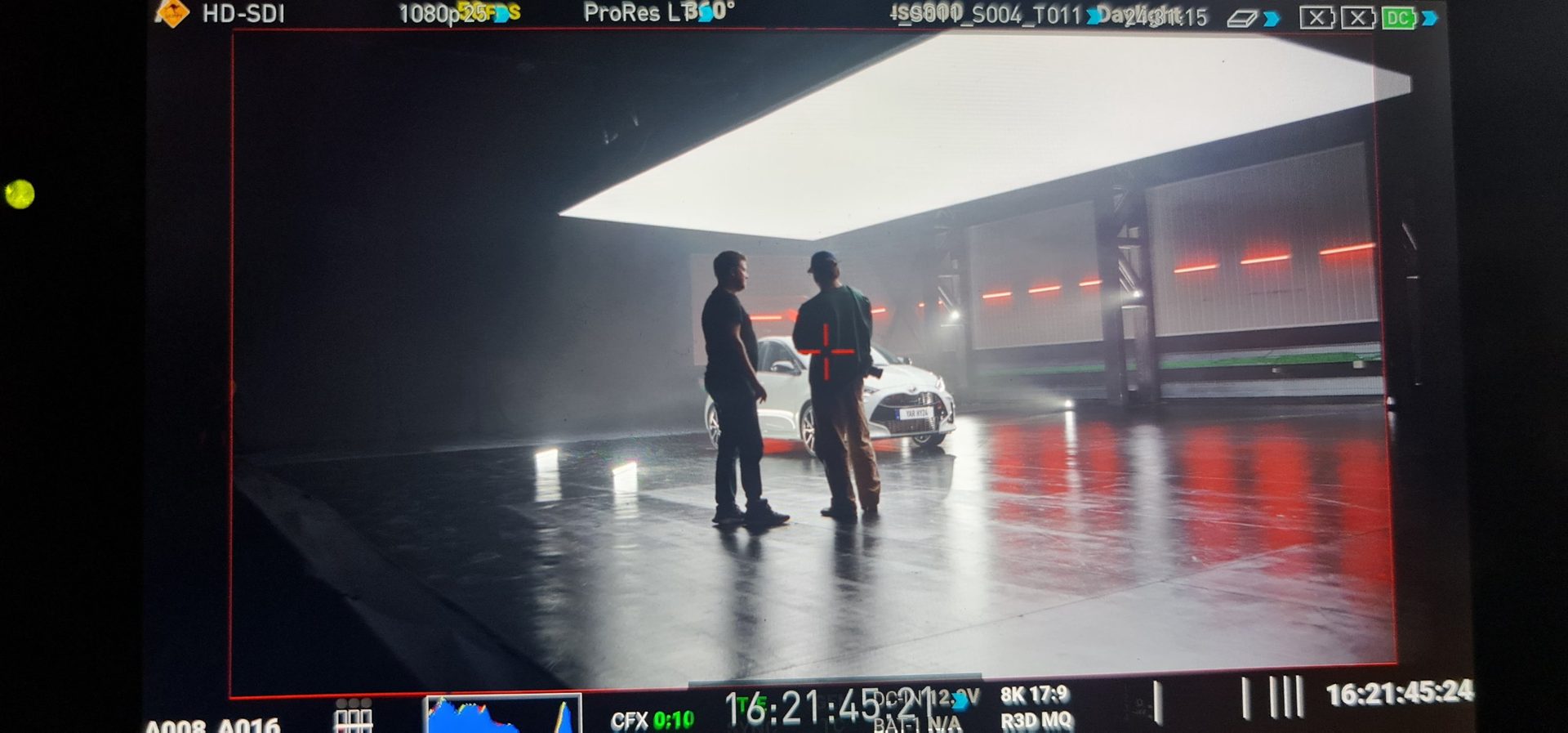
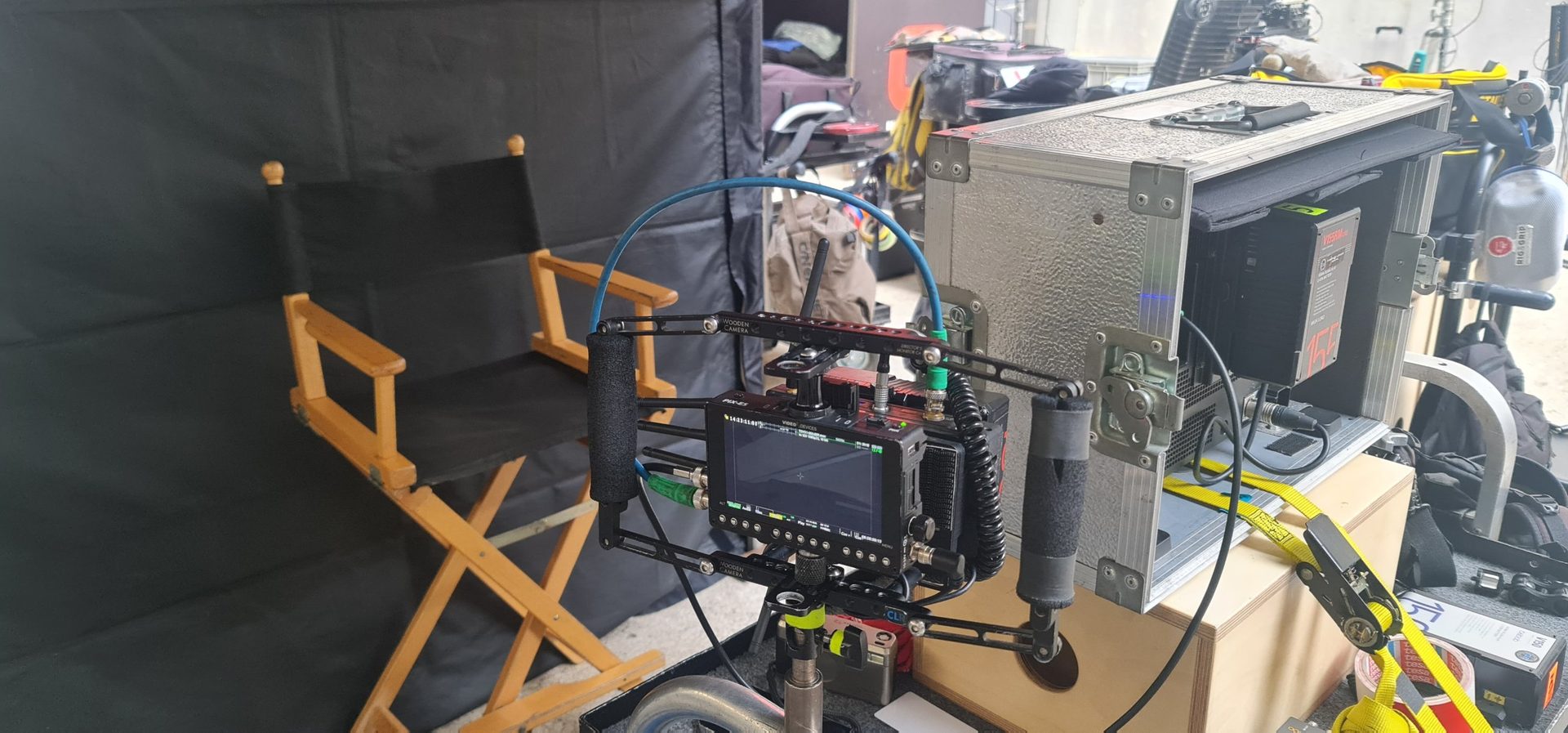
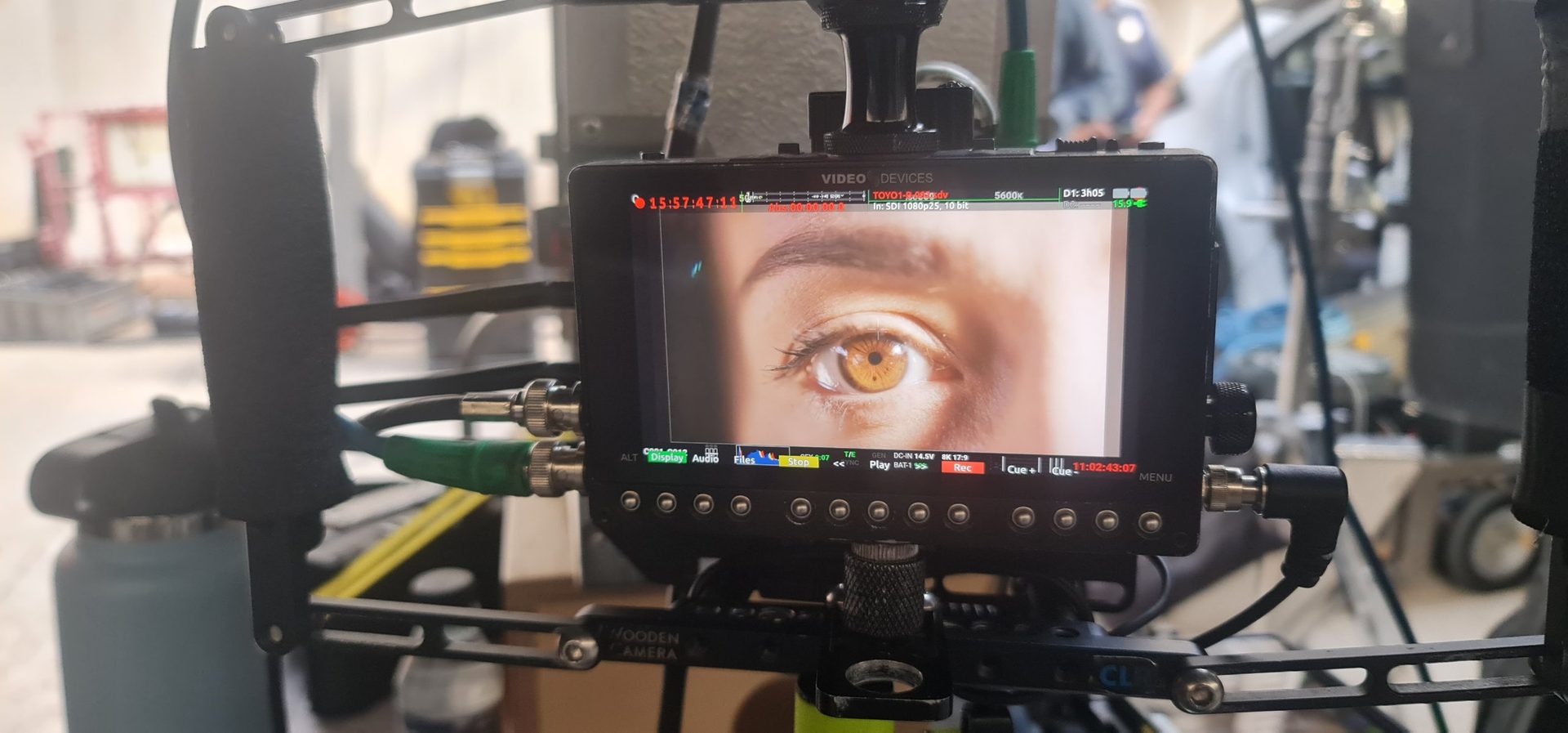
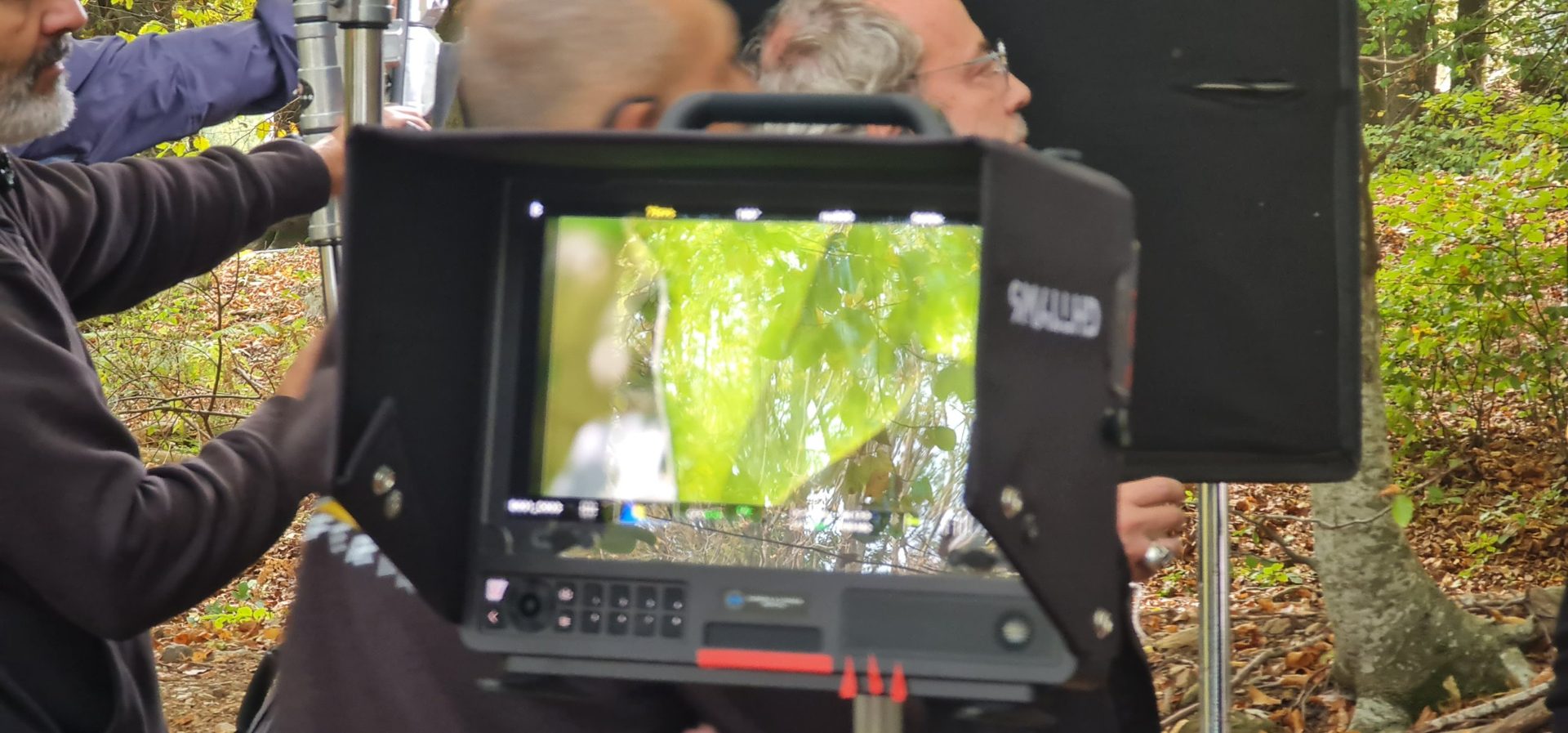
The main camera recorded 8K RED R3D, with ProRes on the monitors for review. Every card was checked and backed up by the DIT before it was cleared. Takes followed one naming scheme from slate to edit, so a shot number on set is the same shot number in Nuke. In the video village, the agency could see quick comps of key VFX shots on the day, so creative decisions were made on set, not three weeks later.
04The result
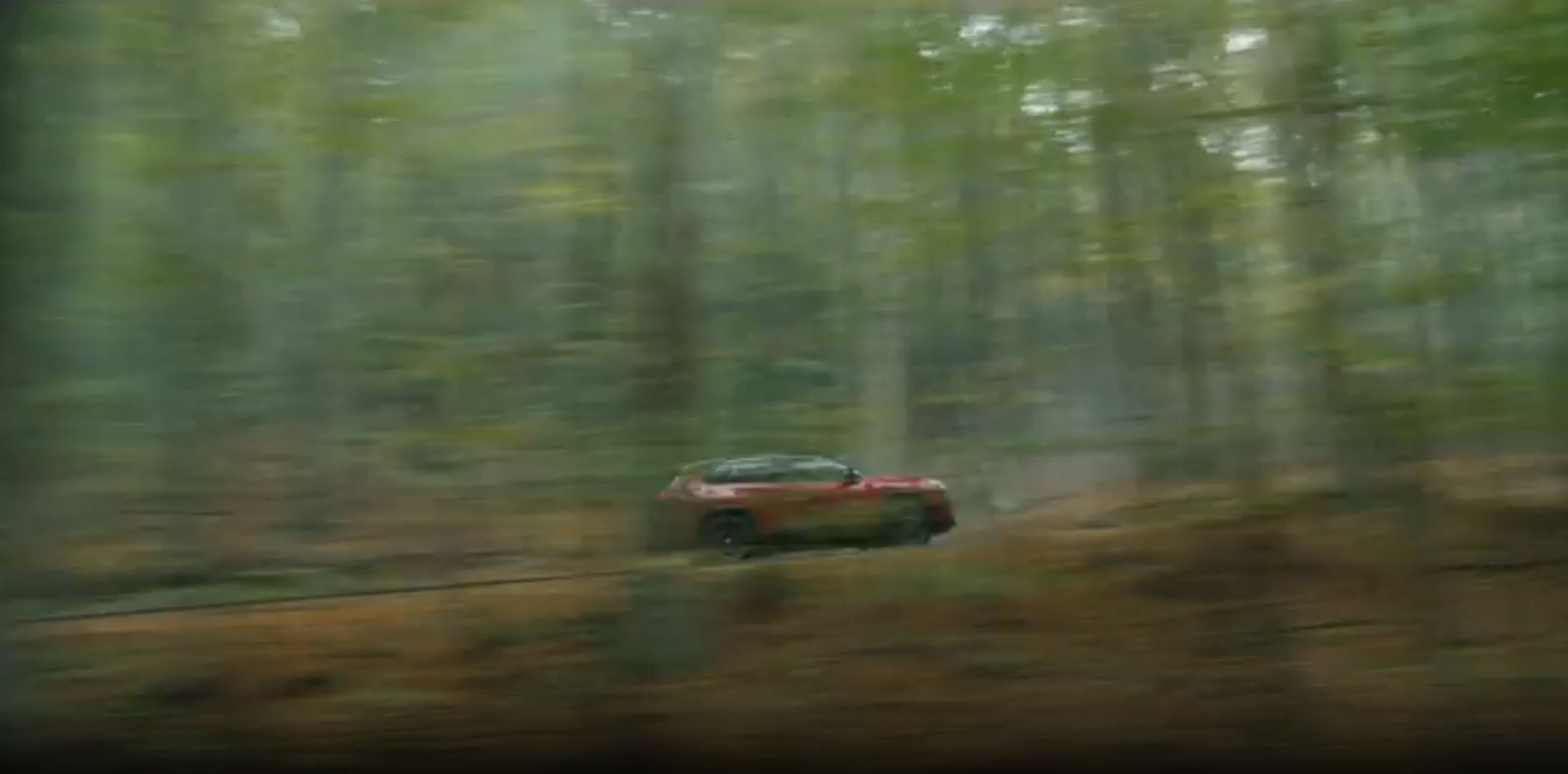
Because the problems were solved on set, postproduction could spend its time on the image instead of on rescue work: clean plates for every rig, reference for every light, and a product that never needed to be rebuilt. The finished film moves from the city to the forest with the same light, the same precision and the same car in every frame.
Planning a car or product shoot?
Bring IneoMedia to set. It is cheaper than fixing it later.